

Technology guide
Collagen fibres and skin ageing
Collagen gives the skin its strength and structure. Understanding how it ages helps explain what firming treatments can offer, and why prevention matters.
Collagen, the skin's framework
Collagen is the most abundant protein in the dermis. It forms fibres that give the skin its strength, firmness and structure. It is produced by cells called fibroblasts.
The main types
Type I collagen, the most abundant, provides strength. Type III, more supple, contributes to elasticity. Other, less common types notably anchor the epidermis to the dermis. With age, the proportion of type III decreases and the skin becomes less supple.
How it ages
Production gradually slows from around the age of thirty, while the enzymes that break down collagen become more active. The fibres become disorganised and stiffen as a result of glycation, a reaction between sugars and proteins. The result: fine lines, then laxity.
What accelerates ageing
The sun is the leading factor: UVA rays reach the dermis and break down collagen. Smoking, chronic inflammation, stress, pollution and a very sugary diet also accelerate it.
What technologies can do
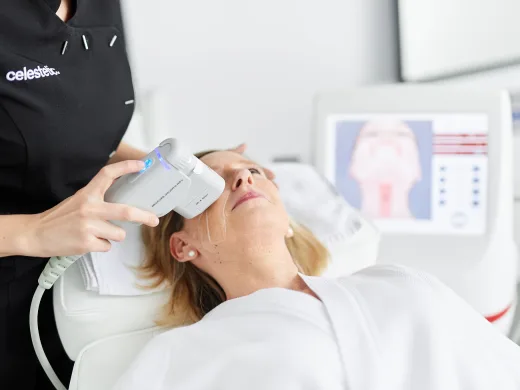
HIFU and radiofrequency create controlled heating that restarts the production of new collagen; LED stimulates fibroblast activity without heat. They do not repair collagen that is already damaged, but add new collagen: the improvement is real but partial, and needs maintaining.
Good habits to pass on
Daily sun protection, no smoking, a diet rich in protein, vitamin C and antioxidants, enough sleep, regular physical activity. Prevention starts early; corrective treatments take over when laxity appears.