

Technology guide
Cryolipolysis: how it works and its principles
Cryolipolysis uses controlled cold to eliminate some of the fat cells in an area, without surgery. Principle, how a session unfolds and precautions.
Definition
Cryolipolysis is a non-invasive body contouring technique. An applicator cools the area in a controlled way; fat cells, which are more sensitive to cold than the skin, nerves or blood vessels, are selectively affected and then eliminated by the body.
Why cold targets fat
The lipids in adipocytes crystallise at temperatures that other tissues tolerate without damage. This crystallisation triggers the programmed death of the fat cell (apoptosis), followed by its gradual elimination by macrophages and the lymphatic system.
Settings
Cooling temperature, duration of the cold phase, number of applicators, suction strength that holds the skin in the applicator. Some devices add rewarming phases at the end of the session. Generally, one to two sessions per area are needed, several weeks apart.
How a session unfolds
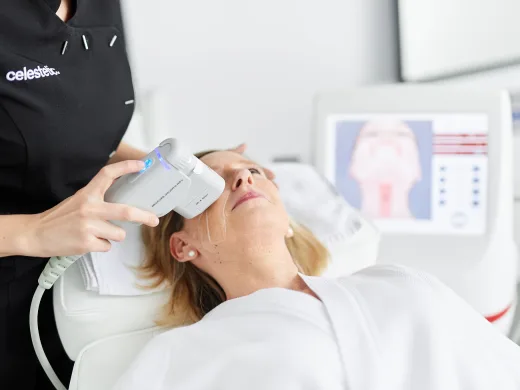
Consultation and photos, marking the area, applying a protective wipe or gel, positioning the applicator with suction. The cold is intense for the first few minutes, with tingling, then the sensation fades. After removal, the area is often massaged. The client resumes her activities immediately.
Results and follow-up
Results are gradual: the area slims down over several weeks, with the result assessed on follow-up photos at around 8 to 12 weeks according to the source. An additional session may then be considered.
Effects and precautions
Temporary redness, swelling and tingling are common. Paradoxical adipose hyperplasia (an increase in fat in the treated area) is a rare adverse effect described in the literature. Cryoglobulinaemia and a history of cold-induced injuries are contraindications.