

Technology guide
Lymphatic drainage by suction
Suction mobilises fluid that has built up in the tissues to support lymphatic drainage. How it works, settings and indications.
The principle
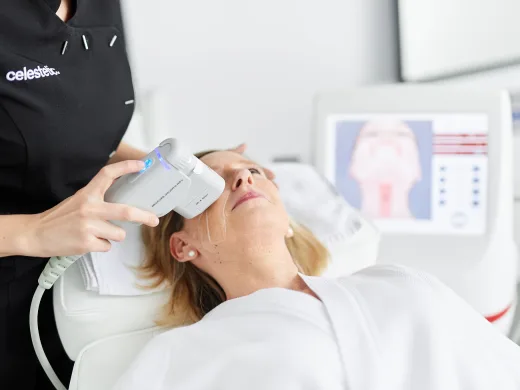
A handpiece creates controlled negative pressure on the skin. The area under suction is at a lower pressure than the surrounding tissues: fluid that has built up between the cells moves and reaches the lymphatic vessels more easily. Whereas pressotherapy pushes through compression, suction pulls.
What happens in the tissues
According to the source, suction promotes fluid reabsorption, stimulates the contractions of the lymphatic vessels and improves microcirculation by reducing pressure on the small vessels.
Settings
Suction intensity, head size (small for precise areas, large for the legs), continuous or pulsed mode, session duration and speed of movement. Pulsed mode is generally more comfortable. Suction that is too strong or movement that is too slow can leave marks: start low and increase gradually.
Which clients is it for?
Heavy legs, water retention, a need to feel lighter, alongside a slimming treatment. Post-surgical oedema and lymphoedema require medical care.
Suction or pressotherapy?
Suction is suited to precise and sensitive areas. Pressotherapy is better suited to large volumes and whole legs. The two combine well.