

Technology guide
Electroporation, needle-free mesotherapy
Brief electrical pulses temporarily open the cell membrane to allow hyaluronic acid, vitamins and peptides to penetrate, with no needles and no pain.
What is electroporation?
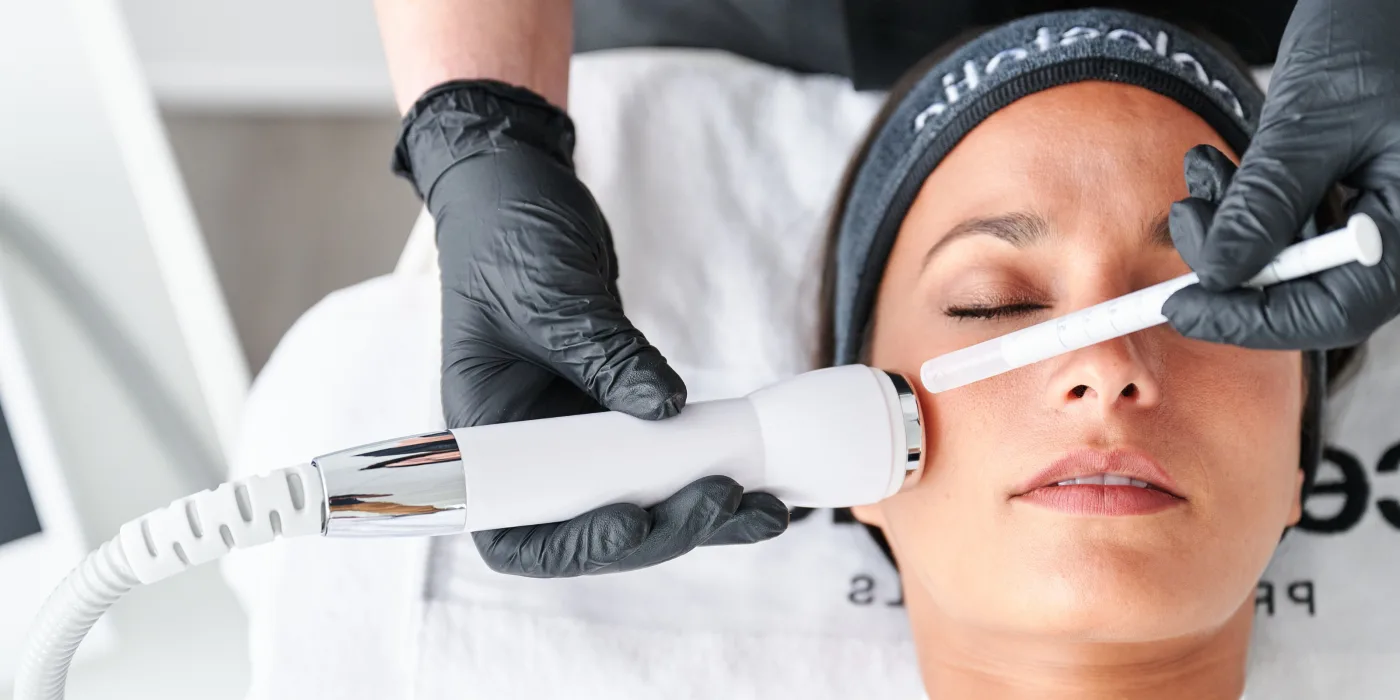
Stemming from research in the 1980s on cell electropermeabilisation, electroporation has been adapted to aesthetics to deliver high doses of active ingredients (vitamins A, B3, C, peptides, hyaluronic acid) without needles. It is often the final step of a treatment after a peel, microdermabrasion or massage.
How it works
The electrical pulse creates temporary, reversible micropores in the cell membrane. The serum's molecules enter the cell, then the pores close as soon as the pulse ends. These micro-stimulations also activate the fibroblasts, which produce more collagen and elastin.
Hot and cold
In cold mode, down to -5°C, the device tightens pores, drains, soothes and gives a tightening effect. In hot mode, up to 40°C, it activates circulation and dilates pores, for example in summer instead of microneedling. Alternating hot then cold is also used for maintenance between two microneedling sessions.
Why the epidermis is an obstacle
Fibroblasts are located between 0.5 and 1.5 mm below the surface. The epidermis lets very little of the vitamins in creams and masks through, and large molecules such as hyaluronic acid cannot cross it without a suitable technique.
What can be treated
Wrinkles and fine lines around the eyes, pigmentation marks and hyperpigmentation, acne scars, enlarged pores, rejuvenation of the hands and décolleté, stretch marks and orange-peel skin, hair and beard density, drainage.
Electroporation, iontophoresis or phonophoresis?
Iontophoresis only delivers small, electrically charged molecules; phonophoresis uses ultrasound. Electroporation is considered the most effective for large molecules; for small ones, such as vitamins, the difference from iontophoresis is slight.
Compared with injections
Botulinum toxin and injected hyaluronic acid give rapid results but are medical procedures, with injections that need to be repeated. Electroporation is a non-invasive alternative, with no pain or downtime, whose benefits build up over the sessions.
How a session unfolds
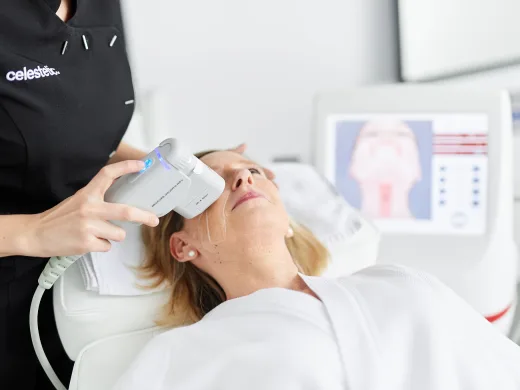
Diagnosis and protocol, deep cleansing, possibly microdermabrasion on the most affected areas, choice of serum, then application of the device, felt as a slight tingling. The session lasts 15 to 30 minutes and the skin is firmer and tighter from the very first time.
Number of sessions
One session per week for at least 6 weeks for an optimal result.
Choosing the right serums
According to skin type (niacinamide for oily skin, hyaluronic acid for dry skin) and the goal (antioxidants, retinol or peptides for anti-ageing, vitamin C for radiance). Concentrated serums, free from fragrance, colourants and parabens, and a prior patch test.
Choosing the right device
Reliability, ease of use, intensity and temperature settings, available training, after-sales service and value for money.
Contraindications
Heart disease and pacemakers, pregnancy, epilepsy, skin cancers or suspicious lesions in the area, advanced diabetes, significant skin infections or irritation. Always take the client's medical history.
Mistakes to avoid
A protocol that is not personalised, ignored contraindications, poor-quality products, neglected hydration and a poorly maintained device.