

Technology guide
808 nm diode laser: how it works and its principles
The 808 nm diode laser is the most widely used hair removal technology. Why this wavelength, how a session unfolds and what its limits are.
Definition
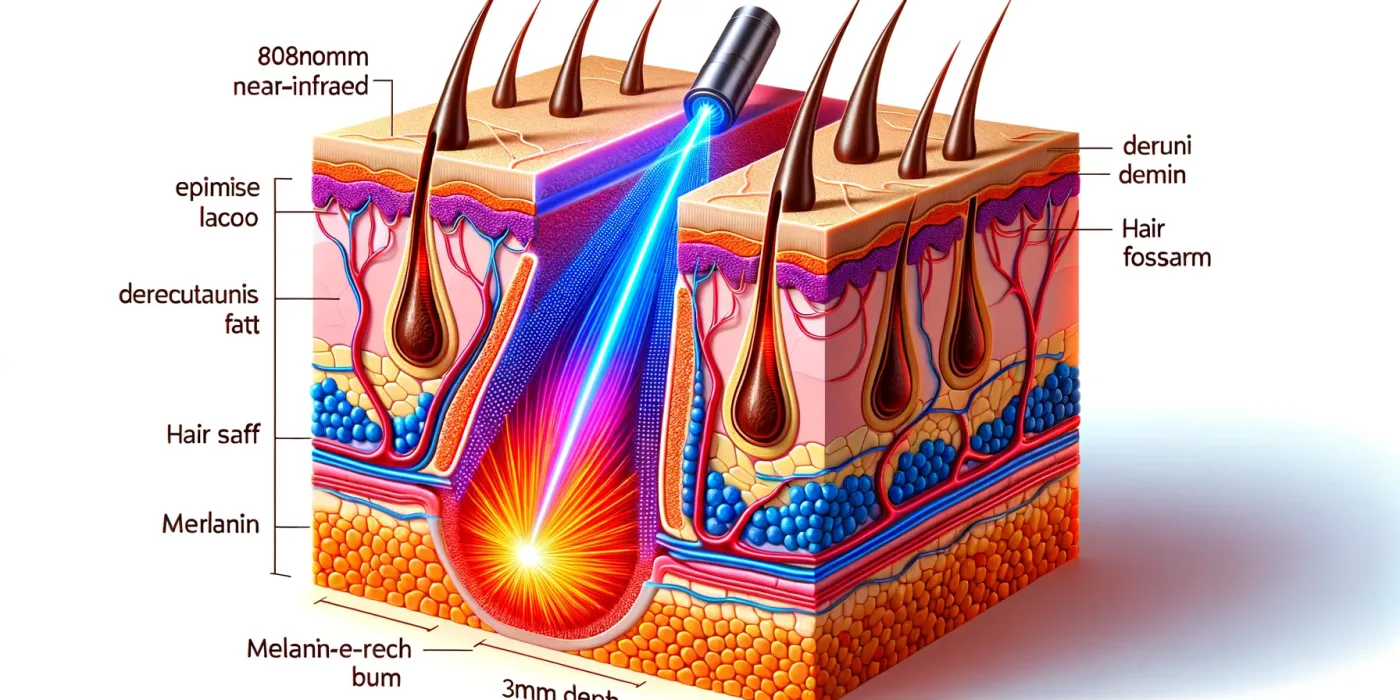
The 808 nm diode laser uses a semiconductor component that emits near-infrared light at 808 nanometres. This wavelength offers a good balance between absorption by the melanin in the hair and penetration into the skin.
Why 808 nm?
It lies within the “optical window” where light penetrates the skin well, while haemoglobin and water absorb little of it. It thus reaches the hair root while sparing the epidermis, which makes it usable on a wide range of skin types.
What happens in the follicle
The melanin in the hair absorbs the light and converts it into heat. This heat spreads to the structures that produce the hair and damages them, which first slows and then prevents regrowth.
How a session unfolds
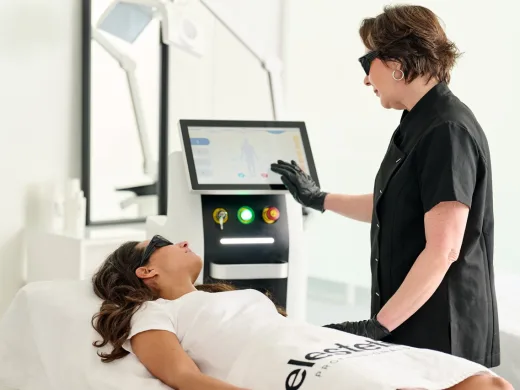
Shaving the day before or on the day, cleansing the skin, contact gel if the device requires it. Settings according to skin type, area and hair. Protective eyewear for the client and the practitioner. Regular shots without too much overlap, while observing how the skin reacts. Then soothing gel and sun protection; no sun, sauna, swimming pool or intensive exercise for 24 to 48 hours.
Variants
Handpiece firing single shots, scanning mode for large areas, or platforms combining 808 nm with other wavelengths, such as the EpilPro MAX.
Limits
Little or no effectiveness on white, grey, very fine or very blonde hair. Caution on recently tanned skin and on skin type VI, where 1064 nm is preferable. No sessions during pregnancy, or on an infection or active eczema.