

Technology guide
Red and infrared LED in aesthetics: photobiomodulation
LED stimulates skin cells with light, without heat or pain. How photobiomodulation works and the indications for using it.
Definition
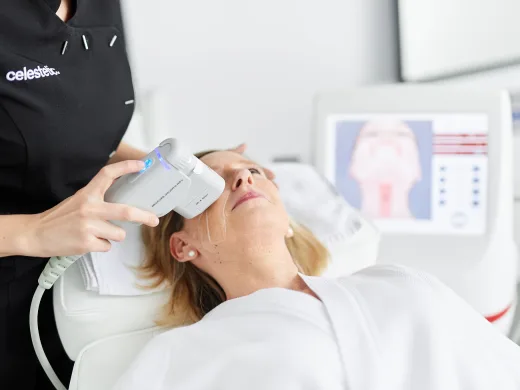
Photobiomodulation involves exposing the skin to light of a precise wavelength, emitted by LEDs, to stimulate cell activity. Unlike laser, LED light is low-intensity, diffuse and does not heat the skin.
Wavelengths
Red light (around 630 nm) acts on the surface and in the dermis. Near-infrared (around 800 to 850 nm) penetrates more deeply. Other colours, such as blue, have specific uses, notably on acne-prone skin.
How it works
The light is captured by an enzyme in the mitochondria, the cells' power plants. These then produce more energy (ATP). The better-supplied fibroblasts produce more collagen and stimulate their neighbours. The effect comes from activating metabolism, not from a micro-lesion as with HIFU or radiofrequency.
Indications
Dull or tired skin, first signs of laxity, prevention of ageing, skin sensitised after a more intensive treatment, post-inflammatory marks, acne-prone skin, and as a complement to body treatments for cellulite.
In practice
The session causes no unpleasant sensation or redness, and the client resumes her activities immediately. Results are more subtle than those of HIFU or radiofrequency and build up over a course of several sessions a week, followed by maintenance. LED combines easily with other treatments.
Precautions
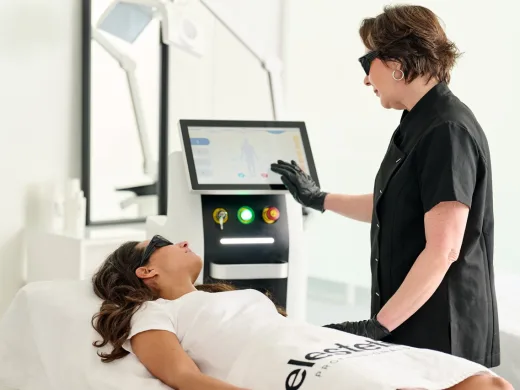
Protect the eyes. Severe photosensitivity and photosensitising medicines require medical advice; in the case of a suspicious skin lesion, refer to a dermatologist.