

Technology guide
LED photobiomodulation
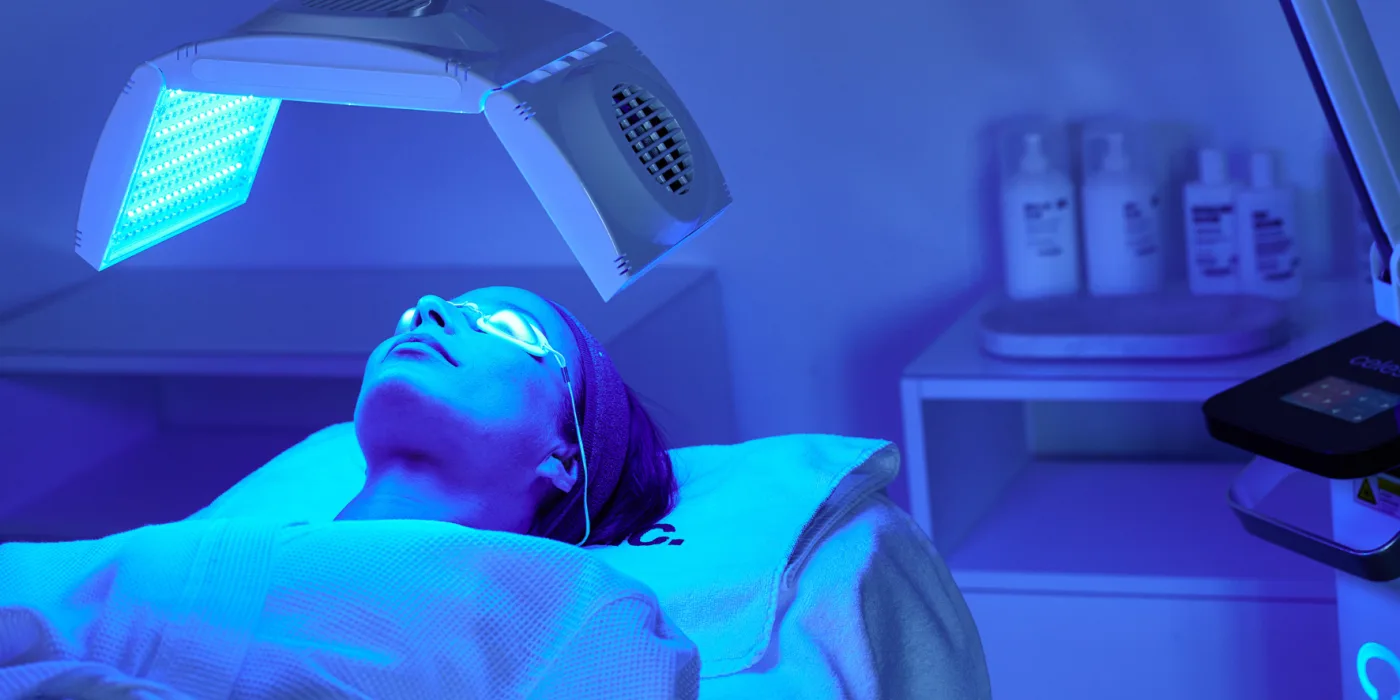
LED light stimulates skin cells without heat or pain. On its own or at the end of a treatment, it soothes, regenerates and prolongs the effect of your other techniques.
A gentle, proven technique
Gentle techniques are sought after by clients wary of invasive treatments. Photobiomodulation has found its place in aesthetic medicine and in treatment rooms, where it complements most treatments.
A little history
Its healing properties were first observed by Hungarian researchers; in the 1990s, NASA studied it on living organisms. It has been used in treatment rooms for around ten years.
How it works
Photons penetrate the skin and are absorbed by the cells' mitochondria. Each colour acts at a different depth and triggers a specific response: cell mobility, collagen synthesis, fibroblast proliferation, antioxidant action and stimulation of microcirculation.
Boosting scrubs and microdermabrasion
A 15 to 20 minute session after a scrub or microdermabrasion extends the surface treatment into the deeper layers.
Soothing after sun exposure
LED relieves and soothes sunburn and helps repair the effects of prolonged exposure, useful after the holidays.
A non-invasive anti-ageing effect
It stimulates fibroblasts, and therefore the production of collagen, elastin and hyaluronic acid, and slows down the enzymes that break down the skin. In 6 to 8 sessions, at a rate of two per week, the skin becomes smoother, firmer and more radiant.
Reducing stretch marks
Its deep action complements surface techniques such as microneedling, whose after-effects it also limits. The brand reports visibly reduced stretch marks after 8 sessions.
Supporting the scalp
For hair loss linked to stress, the seasons or hormonal changes, one session a week for 10 weeks helps thicken the hair, according to the brand.
In practice
A session lasts about 20 minutes, with no intervention on your part. The client feels a gentle warmth. LED can be scheduled before or after most other treatments.