

Technology guide
Skin types and beauty treatments: the guide
Your client's skin type determines the choice and settings of many technologies, especially those that use light. Guidelines by skin type and by technology.
The Fitzpatrick classification
Published in 1975, it classifies skin into six skin types according to skin colour, hair and eye colour, freckles and reaction to the sun: from skin type I (very fair, always burns, never tans) to skin type VI (black skin, almost never burns).
Technologies sensitive to skin type
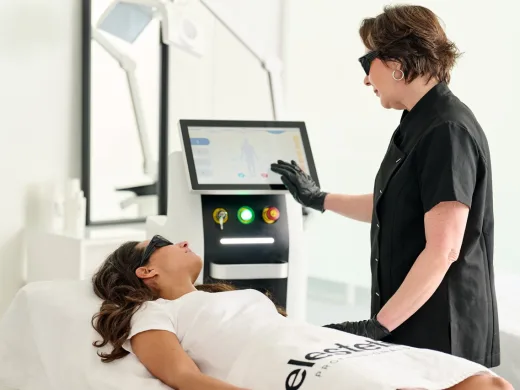
All those that use light: lasers and intense pulsed light. Alexandrite (755 nm), ruby and IPL mainly suit fair skin. 808 nm covers a wide range with suitable settings. 940 nm and above all 1064 nm are the safest on dark skin.
Technologies largely independent of skin type
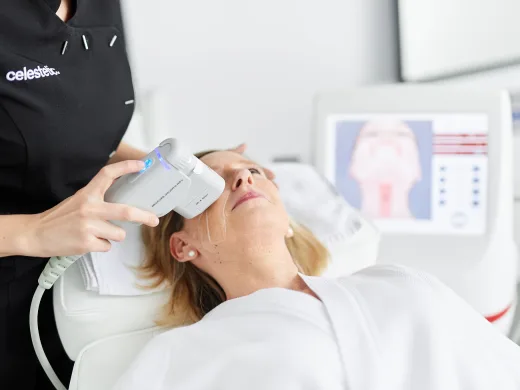
Radiofrequency, HIFU, cryolipolysis and EMT do not rely on the absorption of light by melanin: the source considers them usable on all skin types, with the usual precautions.
Precautions by skin type
Very fair skin: risk of burns and prolonged redness, cautious settings and good cooling. Intermediate skin: risk of pigmentation marks if energy is excessive. Olive to dark skin: risk of post-inflammatory pigmentation marks, sometimes depigmented areas; preliminary test, reduced energy, more widely spaced sessions. Black skin: only suitable wavelengths, with great caution.
Sun and tanning
Skin type does not change, but tanned skin reacts like darker skin. No sun exposure or self-tanner in the weeks before a light-based treatment, and strict sun protection afterwards.
Assessing skin type
A simple questionnaire (freckles, how easily the skin tans, sunburn) and observation are enough in the vast majority of cases. If in doubt, choose the settings for the darker skin type and carry out a test.