

Technology guide
Laser hair removal and skin types: from fair to dark skin
Your client's skin type determines the wavelength, the settings and the number of sessions. Guidelines for safely treating every skin tone.
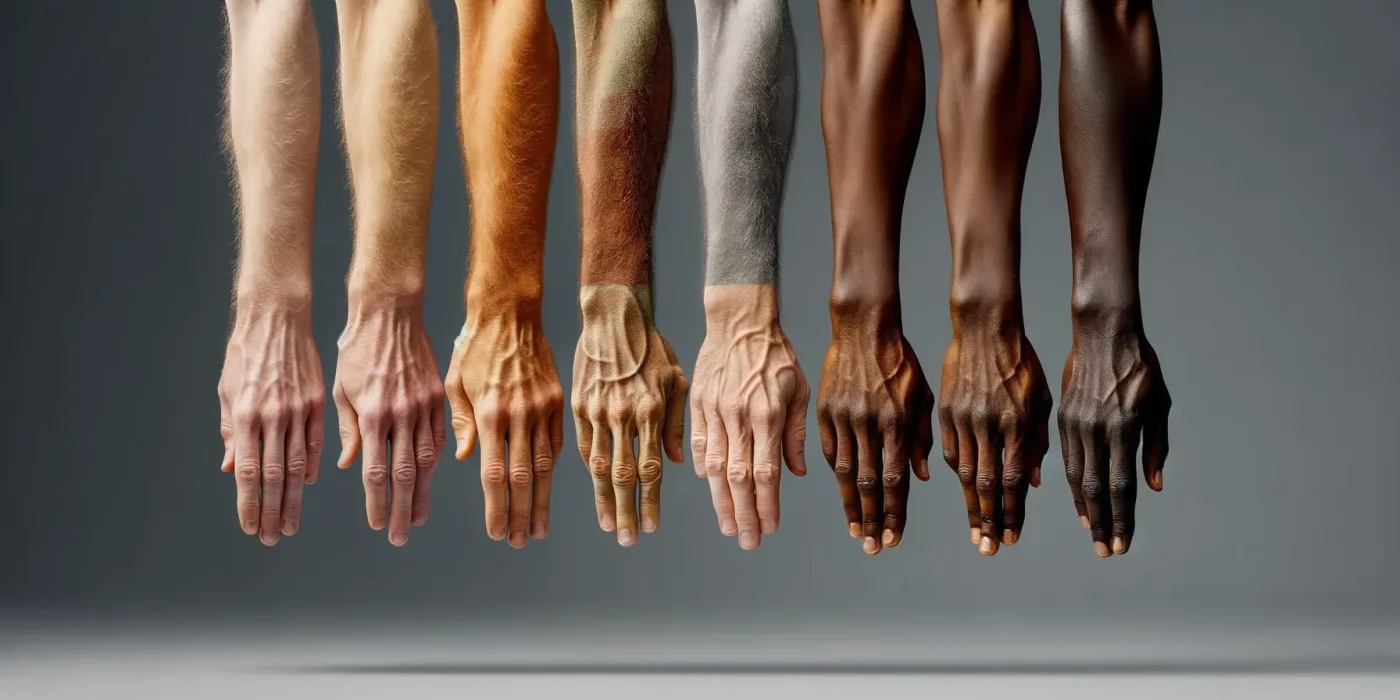
The Fitzpatrick scale
It classifies skin into six types according to pigmentation and reaction to the sun: I (very fair, always burns), II (fair), III (fair to olive), IV (olive, tans easily), V (dark brown), VI (black, never burns). It is the reference for setting a laser.
The challenge of dark skin
The more melanin the skin contains, the more it absorbs some of the energy intended for the hair. The risks increase: burns, pigmented marks after inflammation or, conversely, depigmented areas. Wavelengths are therefore needed that penetrate more deeply and are less absorbed by the epidermis.
Which wavelength for which skin type
Skin types I to III: 755 or 808 nm. Skin type IV: 808 nm with moderate settings. Skin type V: cautious 808 nm or 1064 nm. Skin type VI: 1064 nm, with energy delivered over a longer duration and enhanced cooling. SHR mode, which heats gradually, reduces the risks on dark skin.
More sessions on dark skin
More cautious settings often mean more sessions and longer intervals for skin types V and VI. A prior patch test on a small area is essential.
Delicate areas
On darker skin types, the face and full bikini require the most caution; the full bikini is not really recommended for skin type VI. Legs, arms and back are easier to treat.
Contraindications to check
Pregnancy, skin infection (herpes, impetigo), dermatitis or a wound in the area. Photosensitising medicines, recent isotretinoin, recent depigmenting or corticosteroid treatment, a tendency to keloid scarring, numerous or unexamined moles: medical advice. After the session, strict sun protection limits pigmentation marks.
White and blonde hair
White, grey or very light hair contains too little melanin: the laser is of little or no effect, whatever the skin type.