

Technology guide
Laser hair removal: a guide to the technologies
Alexandrite, diode, Nd:YAG, IPL: not all light-based hair removal technologies perform equally depending on hair and skin. The guide to understanding them and advising well.
The principle
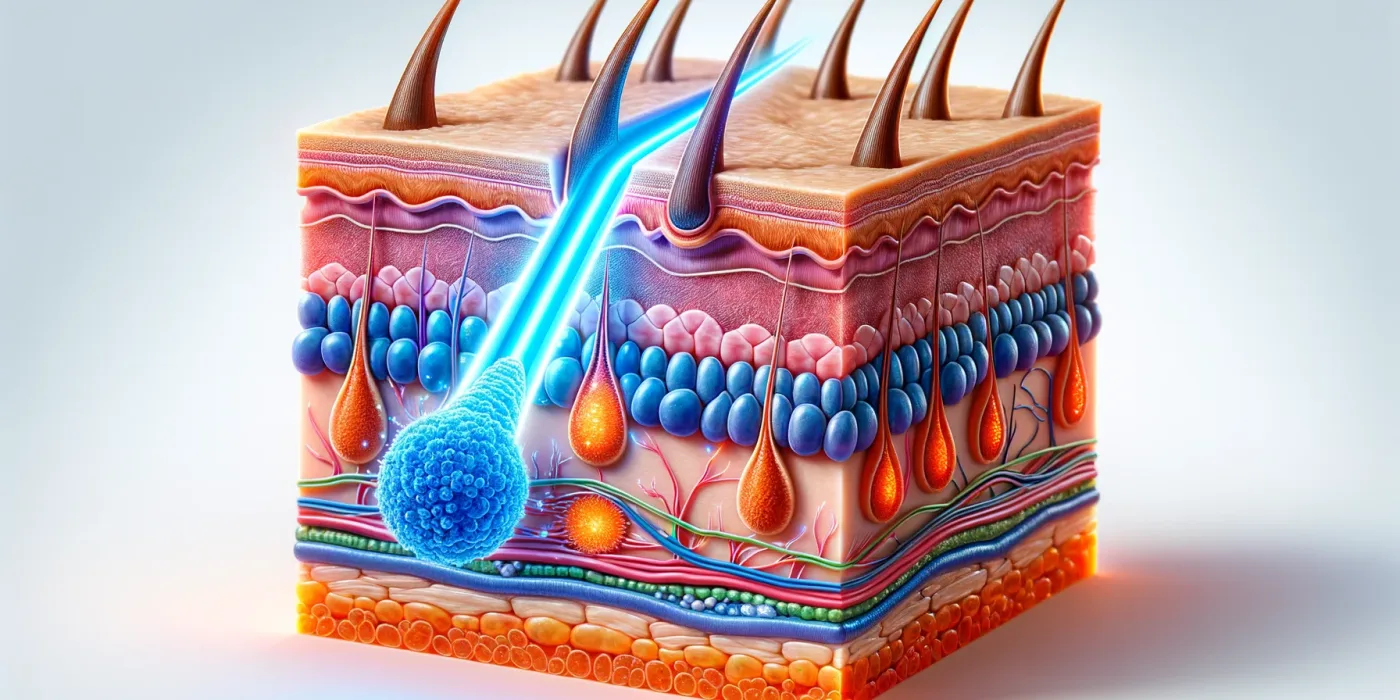
Laser hair removal destroys the hair follicle using light. The melanin in the hair absorbs the energy, which is converted into heat and damages the structures responsible for regrowth. This is called selective photothermolysis.
The three rules of photothermolysis
Choose a wavelength that is well absorbed by the melanin in the hair, deliver the energy over a period short enough for the heat to remain concentrated in the follicle, and supply enough energy (the fluence) to destroy it without burning the skin.
Wavelengths
The longer the wavelength, the deeper it penetrates and the less it is absorbed by the melanin in the skin. Ruby (694 nm) and alexandrite (755 nm) lasers suit fair skin. The 808 nm diode is the most versatile. The 940 nm diode and the Nd:YAG (1064 nm) are safer on dark skin. IPL, with its broad spectrum, is less selective than a laser.
Areas treated
Face, underarms, bikini line, legs, arms, back, chest: all areas can be treated. The best results are obtained on thick, dark hair. White, red or very fine hair responds poorly to light.
Several sessions, a lasting reduction
The laser only acts on hairs in the growth phase: several sessions are therefore needed, several weeks apart. We speak of lasting reduction rather than permanent removal: a few fine hairs may grow back and warrant maintenance sessions.
The risks to manage
Temporary redness and swelling are normal. Burns, light or dark marks and, more rarely, scarring can occur if the settings are not adapted to the skin type. A good skin diagnosis and a prior patch test limit these risks.