Contents 6 sections
Your client saw it on social media, in a magazine or at the pharmacy: PDRN, "salmon DNA", is supposedly the new miracle active. It came from Korea and became the trending ingredient in serums and creams in 2026.
Your role is not to follow fashion but to help your client see clearly. Here is what you need to answer her questions.
What is PDRN?
PDRN stands for polydeoxyribonucleotide. It is a mixture of purified DNA fragments. Traditionally, it is extracted from salmon or trout milt. On an ingredient list, it often appears as sodium DNA.
One point often reassures clients: PDRN does not change the DNA in her skin. These are small fragments, used as a raw material.
Are all sources equal?
No. The trade journal Cosmetics Business reviewed more than fifty ingredients and finished products sold under this name. It found marine DNA, but also ingredients derived from fermentation, microalgae or plants. They can carry the same name on the label without being identical.
Where PDRN comes from
| Origin | What to know |
|---|---|
| Salmon or trout | The historical source, on which most of the research is based |
| Plants or microalgae | Recent alternatives, often highlighted for formulas without animal ingredients |
| Fermentation or lab production | New technologies, with little track record so far |
How might it act on the skin?
Researchers describe two avenues. PDRN may act on a receptor on the surface of cells (the adenosine A2A receptor), which plays a part in repair signals. It may also supply cells with "building blocks" they can reuse to make their own DNA.
These mechanisms have mostly been described in the lab, in cell cultures or in animals. They explain why formulators are interested in the ingredient. They do not yet tell us what a serum does on your client's face.
What we know, and what we do not know yet
Much of PDRN's reputation comes from uses outside cosmetics: in aesthetic medicine, doctors use it in other forms. These procedures are reserved for doctors and have nothing to do with a salon treatment.
In cosmetics, the question is different. A serum is applied to the skin, and published studies on this way of using it remain rare. The trade press stresses it: there is still a gap between a promising mechanism and a proven benefit on the skin.
A promising active is not a miracle active. Your credibility rests on that nuance.
Four simple answers in the treatment room
- 01A serious active, not a magic wand
PDRN rests on interesting scientific foundations. Studies on its use in cosmetics are still few.
- 02The origin matters
Salmon, plant, fermentation: the ingredients are not interchangeable. Read the ingredient list and ask your supplier.
- 03The routine matters more than the ingredient
One active alone does not make beautiful skin. Gentle cleansing, hydration, sun protection and consistency remain the basics.
- 04The salon offers beauty care
What doctors do is another matter and falls solely within their competence. In the treatment room, we talk about cosmetic care.
PDRN in a salon treatment
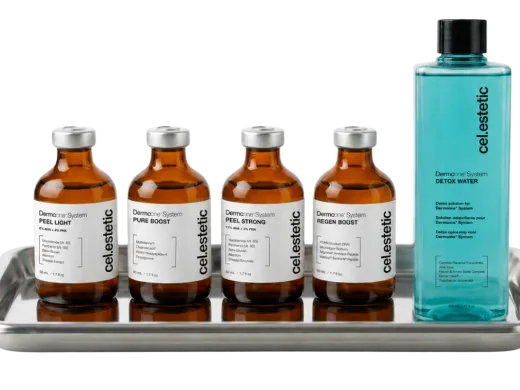
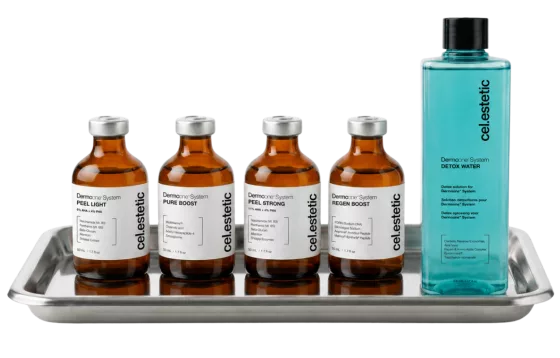
At Teonia, PDRN is part of the Regen Boost booster in the Jet Infusion Solutions range. It is combined with a microalgae solution and peptides, in a three-step protocol: prepare, exfoliate, target.
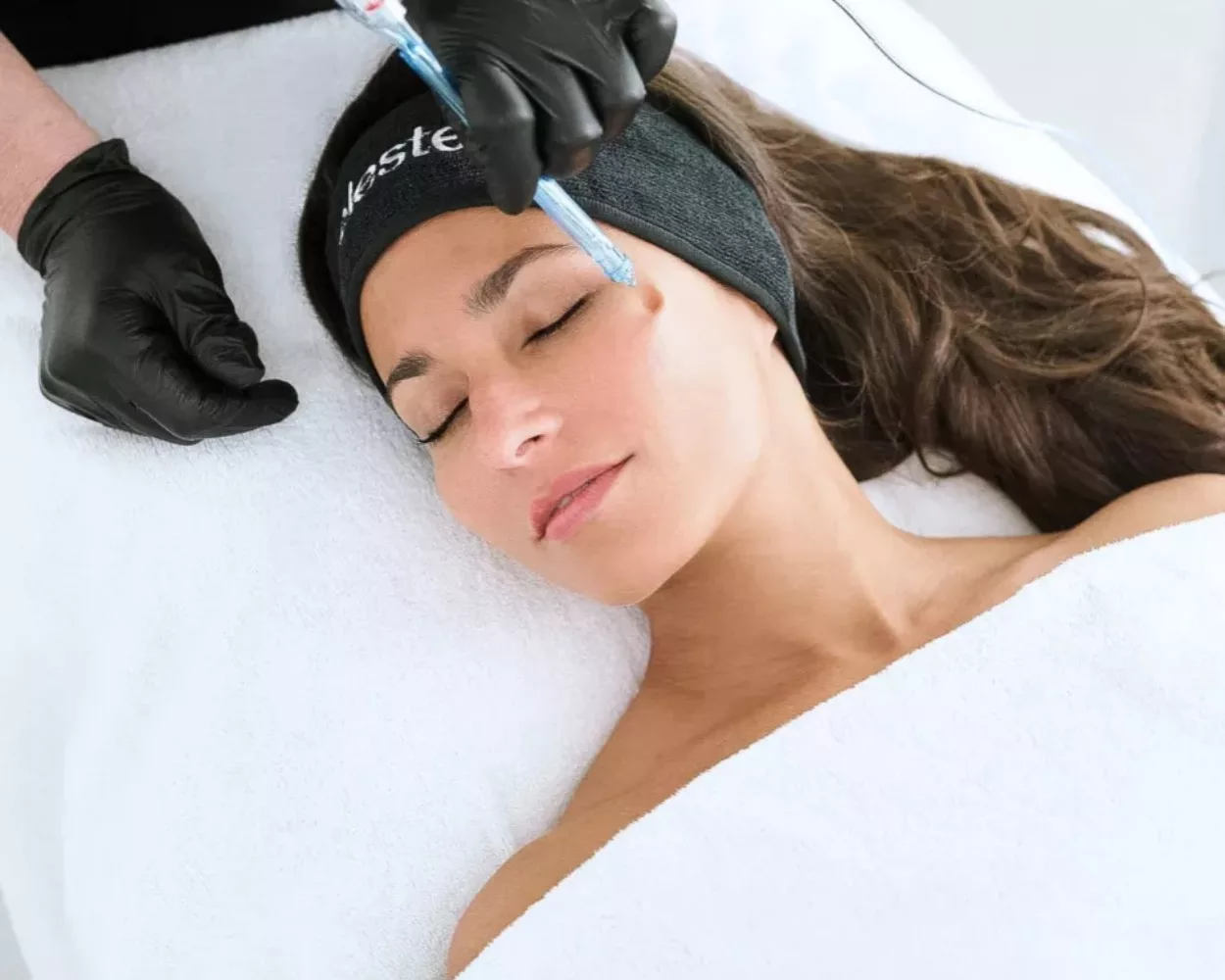
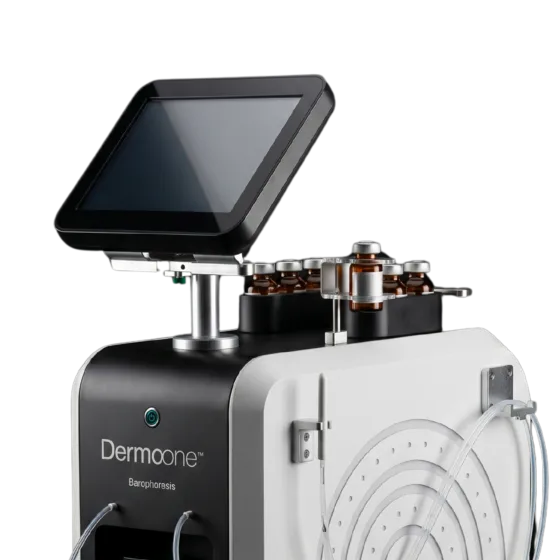
These solutions are formulated for barophoresis, a technique that delivers actives under pressure, without needles. They accompany the Dermoone™ System protocol. The skin diagnosis decides the booster and the intensity of exfoliation.
Frequently asked questions
What is PDRN used for in cosmetics?
It is used in serums and creams for its assumed role in the skin's renewal mechanisms. Studies on its cosmetic use remain limited: it is a promising active, not a guaranteed result.
Is PDRN really salmon DNA?
Traditionally, yes: it is extracted from salmon or trout milt. There are also versions derived from plants, microalgae or fermentation.
Can PDRN be offered in a salon?
Yes, as a cosmetic product applied to the skin, for example in a barophoresis protocol. Procedures carried out by doctors are not for the salon.
To add a PDRN booster to your protocols, discover the Jet Infusion Solutions and the EAOT academy's Barophoresis course.
Further reading
 Produit
Jet Infusion Solutions
Prepare, exfoliate, boost: solutions formulated for barophoresis
 Appareil
Dermoone™ System
One treatment, endless protocols: drain, exfoliate and target without needles
Formation
Barophorèse
Seule technique 3-en-1 de revitalisation globale de la peau | Une nouvelle approche pour des soins esthétiques globaux | Anti-âge…
Source
PDRN: what the science really says (Cosmetics Business, 2026)
The trade press analysis of origins and evidence.
Source
PDRN and polynucleotides (Pharmaceutics journal, 2025)
The open-access scientific review cited in this article.