
Contents 5 sections
"Retinol, retinal, vitamin A, is it all the same?" The question often comes up in the treatment room. It will come up even more: since November 2025, a European rule has limited the concentration of retinol in cosmetics, and stronger products are gradually leaving the shelves.
Winter is the season for night care and for actives that refine skin texture. It is the right time to take stock, in simple words.
Vitamin A, retinol, retinal: who is who?
Vitamin A is not a single ingredient. It is a family of molecules, the retinoids. In cosmetics, three forms are most common.
Retinyl esters (palmitate, acetate) are the gentlest. The skin has to convert them in several steps before they act. Retinol is the best-known form: the skin converts it into retinal, then into retinoic acid. Retinal (or retinaldehyde) is one step closer to the active form.
Remember one simple idea: the more conversion steps, the more gradual and gentle the action. The fewer steps, the stronger the active, and the more it needs skin that is used to it.
The vitamin A family in cosmetics
| Form | Where you find it | What to know |
|---|---|---|
| Retinyl esters (palmitate, acetate) | Day creams, body care | The gentlest form, several conversion steps |
| Retinol | Serums and night care | The benchmark, to introduce gradually |
| Retinal | Night serums | Closer to the active form, for skin that is used to it |
| Retinoic acid | No cosmetics | Banned in cosmetics, it is classed as a medicine |
What does the new European rule say?
European Commission Regulation (EU) 2024/996, published on 3 April 2024, covers three ingredients: retinol, retinyl acetate and retinyl palmitate. It is a European regulation: it applies in the same way in Belgium and France.
The reason is simple. We already get vitamin A from food, and Europe wants to limit total intake from all sources. Retinol cosmetics are not considered dangerous in themselves, but their share of that intake is now capped.
- 0.3%
- retinol equivalent maximum in face care and other products
- 0.05%
- retinol equivalent maximum in body milks and lotions
- 1/5/2027
- date from which only compliant products may remain on sale
Source: Regulation (EU) 2024/996, based on summaries by Biorius, Test-Achats and Exponent.
In practice:
- Since 1 November 2025, new products placed on the market comply with these limits.
- Until 1 May 2027, stronger products already on the market may still be sold. After that date, only compliant products stay on the shelves.
- A mandatory statement appears on the packaging: it flags the presence of vitamin A and asks consumers to take their daily intake into account.
This article is for information and does not replace the official text. For a specific product, refer to the regulation published on EUR-Lex or to your supplier.
How to explain it to your client?
Your client may have read that a 1% serum is "more effective". The new rule is a chance to set things straight: in cosmetics, concentration is not the only criterion. The form of the active, the formula, consistency and sun protection matter just as much.
A moderate concentration used regularly is better than a strong active abandoned after a week.
Recommending a retinol routine, in four points
- 01Start gently
Two or three evenings a week at first, then more often if the skin tolerates it well. Slight tightness in the first few days can happen.
- 02Evenings only
Retinol is used in the evening. In the morning, focus on hydration.
- 03Protect from the sun every morning
Daily sun protection is part of the routine, even in winter and even on grey days.
- 04Do not stack everything
No retinol in the days around a peel or exfoliating treatment. The period depends on the treatment performed: it is up to you to specify it.
And in the treatment room?
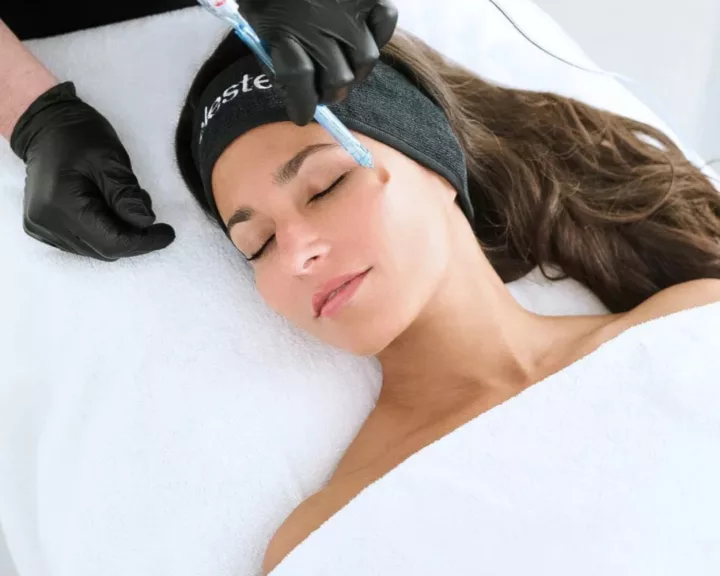
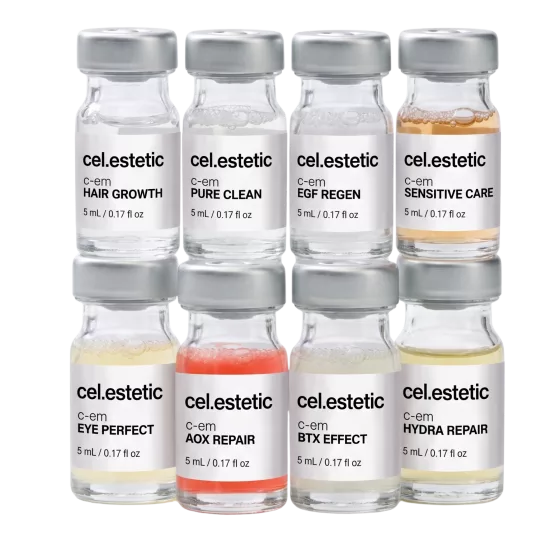
Retinol also has its place in professional treatments. In the C-EM Serums range, the AOX Repair serum combines vitamin C, niacinamide and retinol for stressed skin and a tired complexion. It is used with Meso+ II electroporation or C-PEN III microneedling.
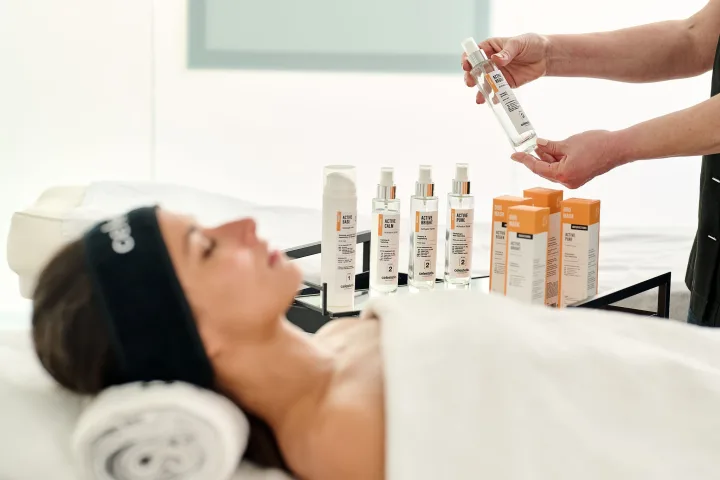
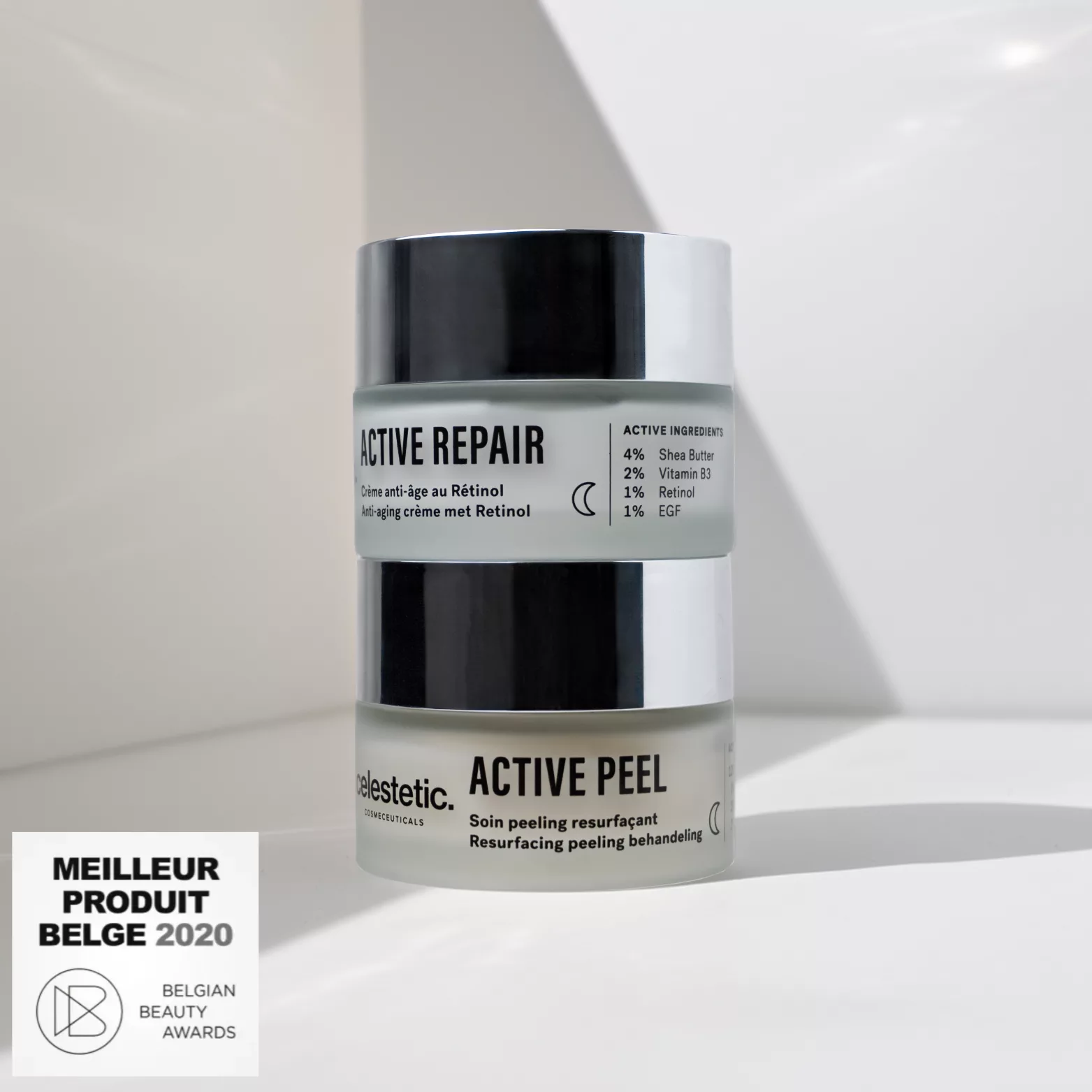
At home, the cel.estetic face cosmeceuticals take over, with retinol or AHA night care depending on the skin. The diagnosis decides: very dry or reactive skin will start with a gentler routine. After a peel, keep in mind the advice sheet to give your client.
Frequently asked questions
What is the difference between retinol and vitamin A?
Retinol is one of the forms of vitamin A. Vitamin A refers to a whole family of molecules, and retinol is the form most used in cosmetics.
Is a 1% retinol serum still allowed?
Products placed on the market since 1 November 2025 must respect the 0.3% retinol equivalent limit in face care. Stronger products already on sale may still be sold until 1 May 2027.
Can retinol be used in winter?
Yes, it is actually a good season, as the sun is weaker. Morning sun protection remains essential.
To build a retinol routine suited to each client, discover our face cosmeceuticals and the EAOT academy's Cosmetology fundamentals course.
Further reading
 Produit
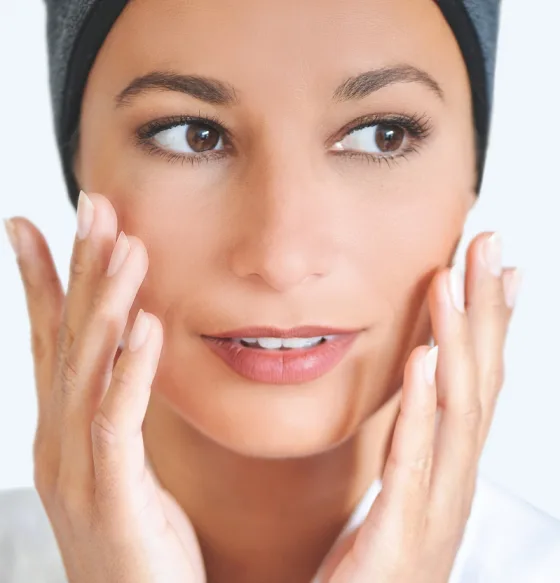
Cosméceutiques visage
Cleansers, serums, creams and SPF to extend your treatments at home
 Produit
Sérums C-EM
9 professional serums for microneedling and needle-free mesotherapy
Formation
Les fondamentaux de la cosmétologie
Les bases essentielles pour comprendre la fabrication des cosmétiques.
 Article
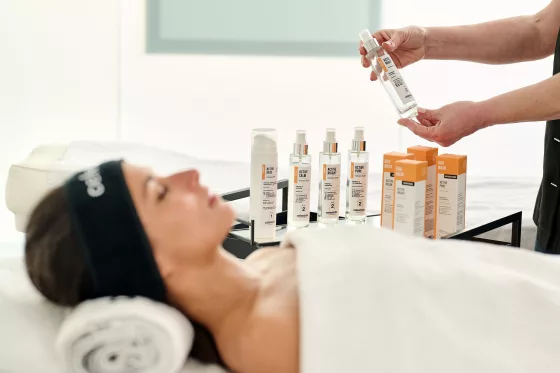
After a peel: the advice sheet to give your client
A successful peel does not end when the client leaves the treatment room. The days that follow matter as much as the treatment it…
Official text
Regulation (EU) 2024/996 on EUR-Lex
The text of the European regulation that sets the new limits.