Contents 4 sections
In the treatment room the two terms get used interchangeably. Yet they do not cover the same mechanisms, the same triggers or the same management.
Sensitive skin reacts to stimuli that should not bother it. Sensitised skin has become reactive through repeated assault, very often from treatments. Getting the diagnosis wrong means risking a more intense protocol on skin that mainly needs rest.
Two different realities
Sensitive skin is a syndrome. Unpleasant sensations (tingling, burning, itching, tightness) appear in response to stimuli that should not provoke them, with or without visible signs. It most often combines a fragile barrier, nerve hyperreactivity and inflammation that varies from one profile to another.
Sensitised skin is an acquired state. It has become reactive after repeated or inappropriate assault: over-exfoliation, a build-up of irritating actives, friction, climate, treatments scheduled too close together. Its barrier is damaged, and it improves markedly once the cause is removed.
The clues during the consultation
| Sensitive skin | Sensitised skin | |
|---|---|---|
| What the client describes | Mainly sensations, sometimes with nothing visible | Sensations and signs: dryness, flaking, diffuse redness, almost constant discomfort |
| Triggers | Everyday stimuli: ordinary cosmetics, heat and cold, wind, hard water, stress | A recent change: new product, stacked actives, increased frequency, new device, treatments too close together |
| Location | The face, with no clear outline | Often follows the areas of application, friction or exfoliation |
| Course | A lasting predisposition, varying from one period to another | Marked improvement once the cause is removed and the barrier repaired |
Diagnosis
Putting numbers on what the client feels
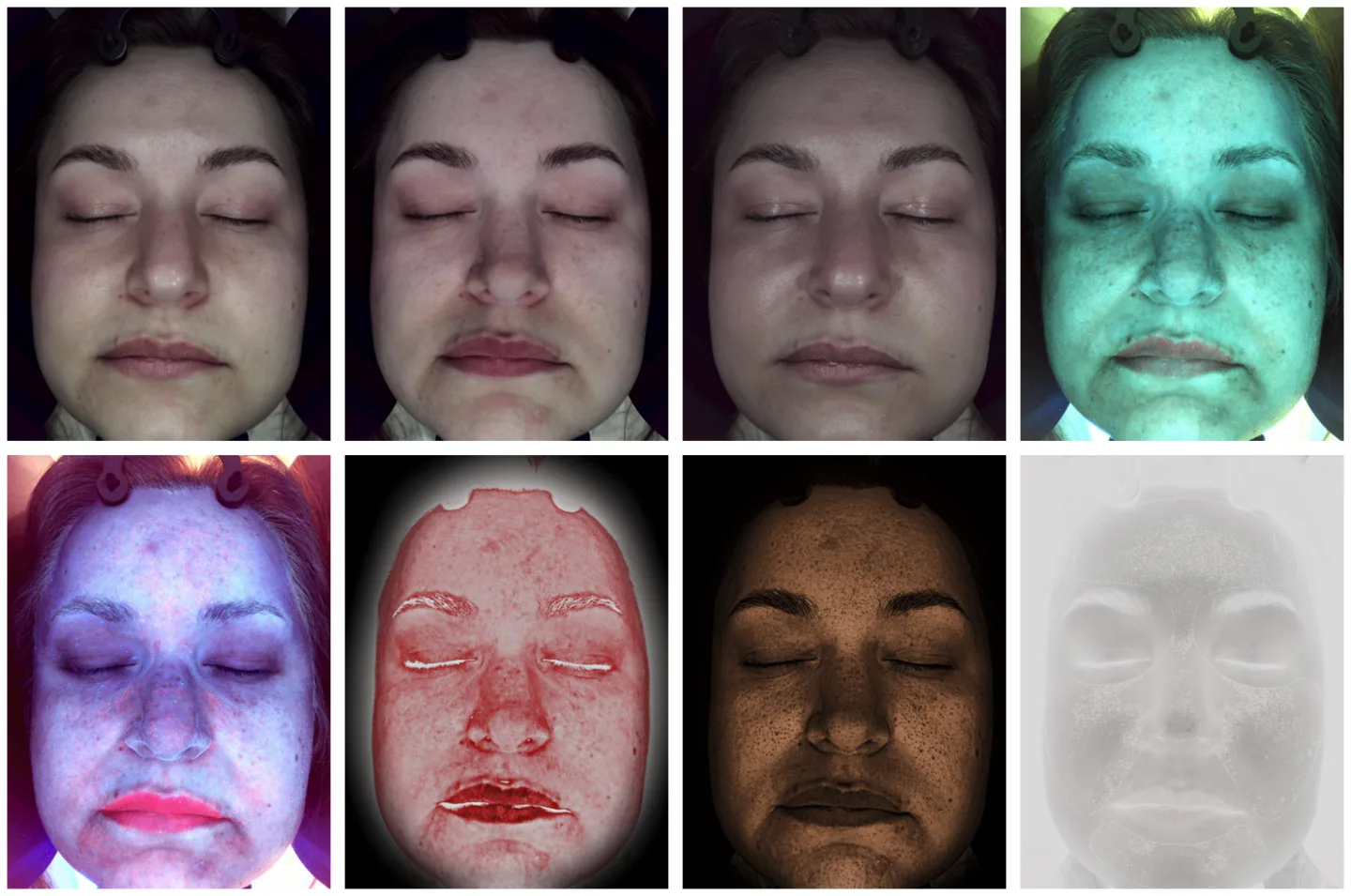
Sensitive skin is partly subjective: questionnaires and reactivity tests do not always identify the same people. Hence the value of a structured diagnosis combining the interview, observation and measurement.
An analyser such as the Smart Skin Pro photographs the skin under 8 light sources and measures 17 indicators, sensitivity among them: enough to track progress from one session to the next and show it to your client.
The trap: sensitised does not mean allergic
In dermatology, "sensitisation" has a precise meaning: it is the first stage of a contact allergy. Two mechanisms therefore need separating:
- irritation: direct assault on the skin, dependent on dose and frequency of exposure;
- contact allergy: an immune response to a specific substance, which presupposes prior sensitisation and returns with every contact.
The two pictures look very much alike. In the treatment room you manage irritation; allergy is for the dermatologist.
The signs of an exhausted barrier
Under the influence of social media, many clients pile up acids, retinoids, scrubs and endless routines. The skin eventually stops tolerating the actives that used to improve it. In the treatment room, several signs should alert you:
- a burning sensation on contact with products;
- an immediate reaction to acids or masks;
- fine, irregular flaking;
- a rough or micro-cracked texture;
- a paradoxical shine, from compensatory excess sebum.
Oily skin can have a damaged barrier just as much as dry skin: you assess tolerance, not only skin type.
Protect before you correct, repair before you act.
Repairing sensitised skin in four stages
- 01Give the skin a rest
Stop every exfoliant, retinoid or strong peel for at least two weeks.
- 02Rebuild the lipid barrier
Ceramides, essential fatty acids and cholesterol restore cohesion between cells. Squalane, shea butter and omega 3 and 6 are good allies.
- 03Hydrate without irritating
Hyaluronic acid, glycerine, panthenol. Formulas with prebiotics or probiotics help rebalance the skin microbiome.
- 04Reintroduce actives, slowly
After three to four weeks, gentle acids (lactic, mandelic) return in a more widely spaced protocol, with tolerance monitored.
Your role: skin coach
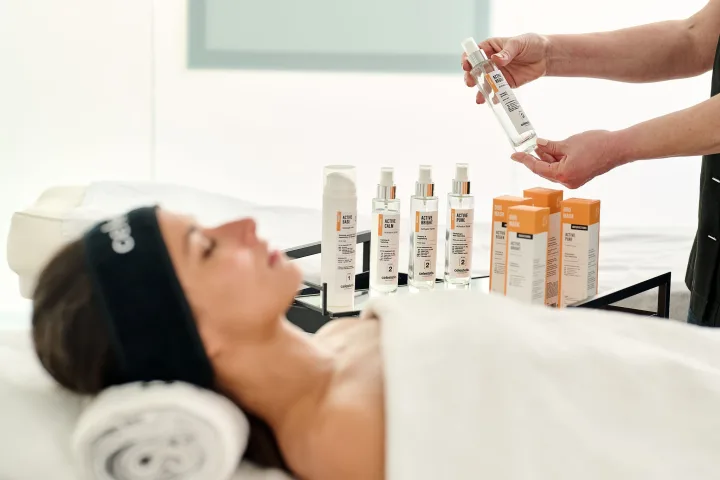
The best prevention is still education. Explaining the difference between stimulating the skin and assaulting it, defending the gradual pace of professional treatments, recommending a simple and coherent routine rather than a pile of products: that is what makes you the authority on your client's skin.
Facial cosmeceuticals continue that work at home, and EAOT's Skin diagnosis training gives you the method to reach the right diagnosis from the first consultation.
Further reading
 Appareil
Smart Skin Pro
An accurate skin diagnosis to personalise your treatments and advice
 Produit
Cosméceutiques visage
Cleansers, serums, creams and SPF to extend your treatments at home
 Article
Finishing with LED: fifteen minutes that extend everything else
After a peel, microneedling or radiofrequency session, the skin is warm, red and permeable. An LED session at exactly that moment…
 Formation EAOT
Skin diagnosis training
Choosing the right in-cabin treatment and the right home routine: the training that positions you as a skin specialist.