Contents 4 sections
The choice of peel is the most delicate decision in a protocol. Poorly calibrated, it provokes reactions and undermines your client's confidence. Well chosen, it delivers visible and lasting results, and turns a client into an ambassador.
In aesthetics you work with the superficial peel, which acts on the outermost layers of the epidermis; medium and deep peels remain medical procedures. The whole difficulty lies in matching the right formula to the right skin.
Why multi-acid formulas change the game
A classic single-acid peel (glycolic, salicylic) requires close monitoring of the contact time to control how deep it acts. The margin for error is narrow: the skin's pH, the thickness of the epidermis or the state of the barrier are enough to tip a controlled exfoliation into a reaction.
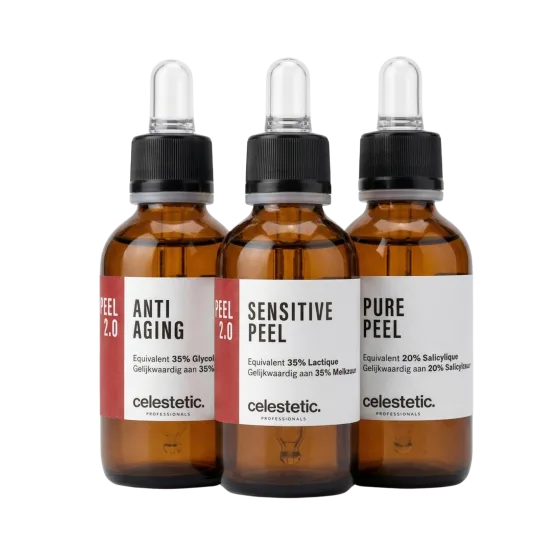
Peel 2.0 combines slow-penetrating acids (mandelic, azelaic) and fast-penetrating acids (salicylic, pyruvic) in a single formula. The former regulate the diffusion of the latter: the action is spread over time and more predictable, and soothing actives limit inflammation after the treatment.
Six acids, six roles
| Acid | What it brings |
|---|---|
| Mandelic | Large, slow-penetrating molecule: ideal for sensitive skin and darker phototypes |
| Azelaic | Anti-inflammatory, it fades pigmentation and regulates sebum |
| Salicylic (BHA) | Oil-soluble, it enters the follicle: blemishes and pores |
| Pyruvic | Restructuring, for marked signs of ageing |
| Phytic | Antioxidant, it reinforces the action of the other acids |
| Glycyrrhizic | Soothing, it reduces the risk of pigmentation after the peel |
From concern to the right peel
Each concern has a primary reference. This table is the basis for the initial consultation; the points to watch should be shared with the client.
| Concern | Peel 2.0 reference | Points to watch |
|---|---|---|
| Pigmentation, melasma, photoageing | Whitening Peel | Suitable for darker phototypes, with built-in anti-pigment actives. Not during pregnancy. |
| Sensitive skin, redness, couperose | Sensitive Peel | The gentlest in the range: ideal for a first session or an anxious client. |
| Radiance, tightening effect before an event | Flash C Peel | Visible result the same day. Combines before microneedling or after dermabrasion. |
| Dehydration, dry skin | Hydra Peel | Restores the moisture balance, particularly in winter. |
| Fine lines, loss of firmness, pigmentation | Anti-aging Peel | Mature skin from 30 onwards, sensitive skin included. Course of 4 to 6 sessions. |
| Marked wrinkles, sagging, thick skin | Anti-aging Peel + | Expert formula, reserved for thick, tolerant skin. |
| Blemishes, enlarged pores, comedones | Pure Peel | The BHA penetrates the follicle. Not in case of aspirin allergy, nor on an open lesion. |
| Severe blemishes, very oily skin | Pure Peel + | Expert formula: prior test mandatory, sessions at least 4 weeks apart. |
The in-cabin protocol
- 01Prepare
Double cleanse, then the degreasing solution. Without it, the hydrolipidic film distributes the peel unevenly.
- 02Apply
With a brush, in a thin, even layer, avoiding the eye and lip contours. Contact time according to the reference, from 2 to 10 minutes.
- 03Neutralise
Always with the neutralising solution, not water alone, to restore the skin's pH.
- 04Soothe
Soothing serum and repair cream to reinforce the barrier straight away.
- 05Protect
SPF 50+ before going out, and even under strong artificial light.
- 06Support at home
For two weeks: no retinol, no AHA, no scrub, intensive hydration and SPF every day.
- 07Space them out
Three weeks minimum between sessions. A course of 4 to 6 sessions, then a maintenance session every 2 to 3 months.
A badly chosen peel disappoints. A well chosen peel builds loyalty.
The five mistakes to avoid
- An Expert peel on thin or reactive skin. Anti-aging Peel + and Pure Peel + are reserved for thick, tolerant skin; anywhere else they risk severe irritation.
- Skipping the degreasing solution. Application becomes uneven, with over-dosed areas and others with no effect.
- Not neutralising. Unless the technical sheet says otherwise, it is mandatory: too low a pH after the session increases irritation and flaking.
- A strong peel on dehydrated skin. A damaged barrier lets acids penetrate too quickly. One or two preparation sessions with Hydra Peel or Sensitive Peel are needed before the active references.
- Neglecting SPF. Freshly peeled skin is photosensitive: without protection you lose part of the result and risk pigmentation.
Training
Technique counts as much as the formula. EAOT offers a one-day in-person Chemical peels training in Brussels, and a digital version to follow at your own pace on the my.celestetic app: 1 hr 30 of video and a final exam.
Further reading
 Produit
Peel 2.0
Superficial fruit acid peels, effective and better tolerated
 Guide technologie
Chemical peels
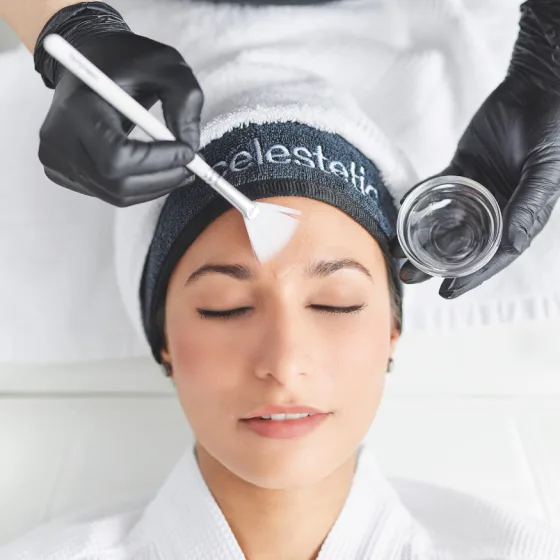
A chemical peel exfoliates the skin using acids. In the treatment room, a superficial peel treats blemishes, pigmentation marks, …
 Article
Phototypes: adapting every treatment, from light to black skin
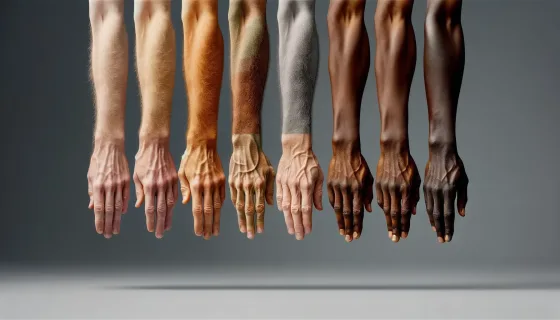
Laser, peels, heat-based devices: the same protocol does not give the same result on light and on dark skin. What phototype chang…
 Formation EAOT
Chemical peels training
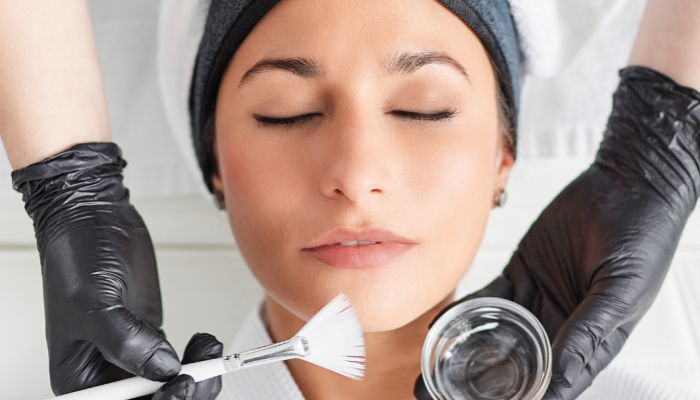
One day in person in Brussels, or the digital version on my.celestetic, with certification.