Contents 5 sections
It is one of the most common requests in the salon, and one of the most loyalty-building. Blemish-prone skin does not transform in a single session: it calls for a course of treatment, a routine followed at home and genuine support.
Handled well, this care makes you your client's authority on her skin. Provided you reach the right diagnosis, choose the right treatments and know where the beauty therapist's role ends.
What to look at during the diagnosis
Before any treatment, take the time to observe and to ask. Two "blemish-prone" skins can call for two very different protocols.
- Shine and skin texture: excess sebum, enlarged pores, T-zone or the whole face.
- The type of blemishes: blackheads and comedones, small isolated blemishes, marks left by past blemishes.
- Sensitivity: oily skin can also be sensitised, often by overly stripping products used at home.
- The current routine: what the client uses, how often, and what she has already tried.
The Skin diagnosis training gives you a complete method for that first consultation.
Which treatments to offer in the treatment room
Three techniques complement each other on oily, blemish-prone skin. They can be offered on their own or combined in a single course, depending on the state of the skin and the client's tolerance. Depending on that tolerance, the first session can be limited to cleansing and LED, with the peel coming at the next session.
Three complementary treatments
| Hydro-microdermabrasion | Peel | LED | |
|---|---|---|---|
| What it brings | Deep cleansing, extraction of blackheads and comedones, hydration | Exfoliation into the follicle, pores and skin texture | Blue light suited to acne-prone skin, soothing at the end of the treatment |
| Device or range | AquaPeel IV with the A.P.S. Pure solution | Pure Peel (Peel 2.0) | BioLED II |
| Duration | 30 to 45 minutes | Contact time according to the reference | 10 to 25 minutes |
| Indicative rhythm | 4 to 6 sessions, 2 to 4 weeks apart | Course of 4 to 6 sessions, 3 weeks minimum between sessions | Often 6 to 12 sessions depending on the objective |
Hydro-microdermabrasion to cleanse
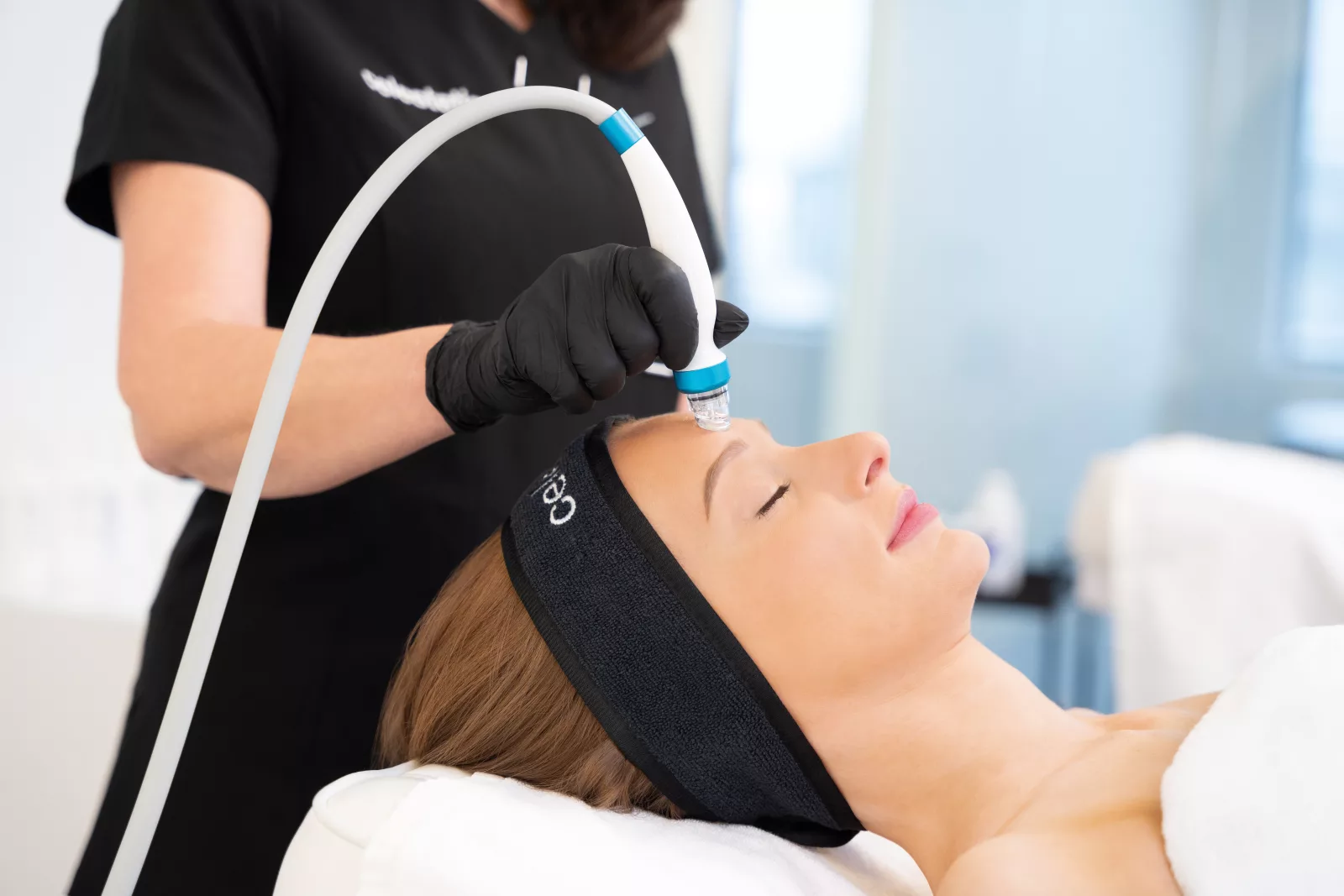
Hydro-microdermabrasion combines suction, water and microbubbles. It extracts impurities, blackheads and comedones without assaulting the skin, which makes it a very good first treatment for a client discovering the salon. On the AquaPeel IV, the A.P.S. Pure solution, with niacinamide and alpha-lipoic acid, is dedicated to oily, acne-prone skin; A.P.S. Detox, with glycolic acid and witch hazel, cleanses the pores with a gentle peeling effect.
The peel to refine skin texture
Pure Peel from the Peel 2.0 range (salicylic 20 % equivalent) is the reference for oily, blemish-prone skin, enlarged pores and marks left by acne. Salicylic acid is oil-soluble: it penetrates the follicle. Its Expert version, Pure Peel +, is reserved for very oily skin, with a mandatory prior test and at least 4 weeks between sessions. The detail of each reference is in our guide to choosing your professional peel.
At the end of the treatment
LED to extend the results
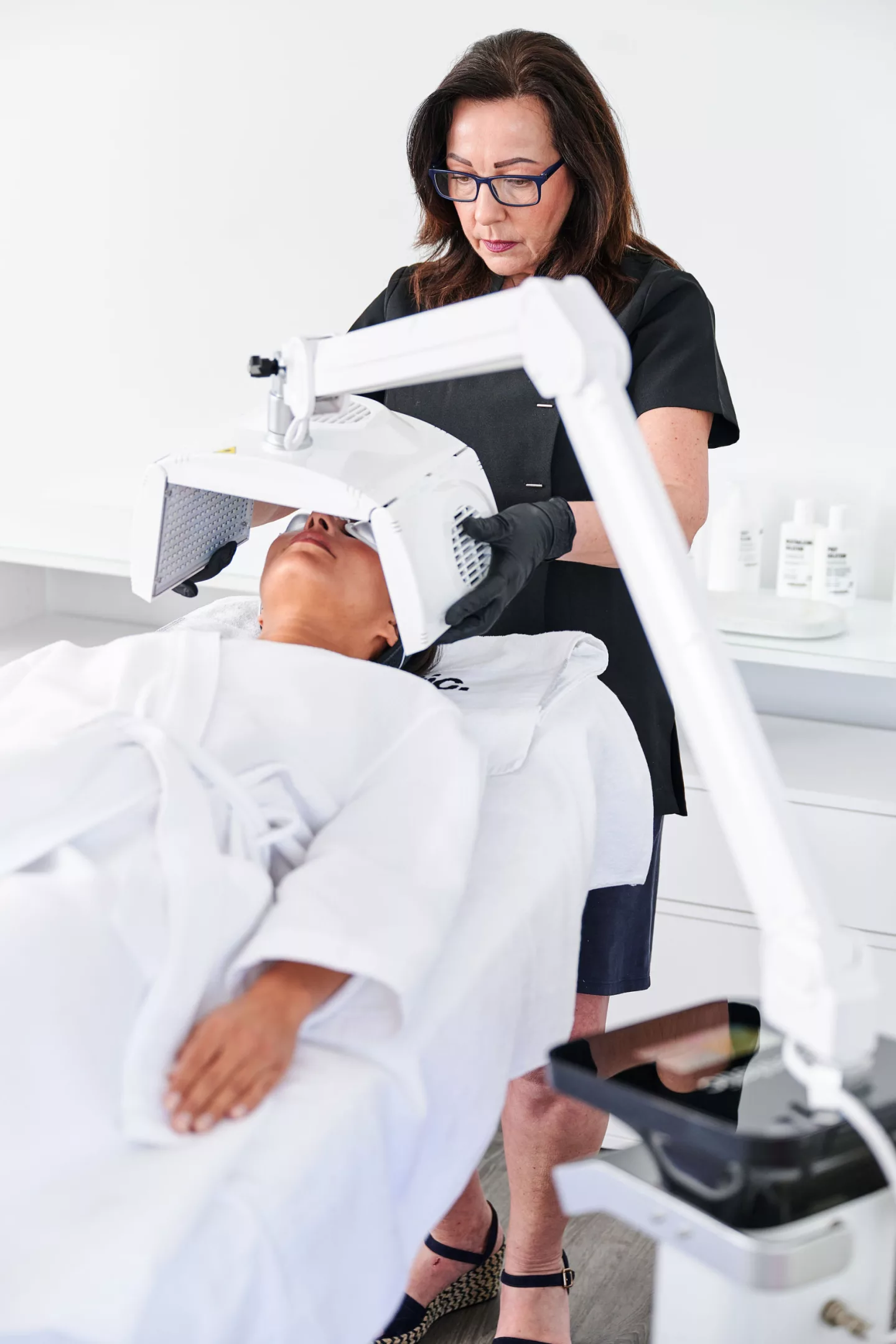
The BioLED II brings blue, red and infrared LEDs together in a hands-free lamp. Blue light has specific uses on acne-prone skin, and the lamp is used after a peel to reinforce results and support recovery. During the session you remain free to advise your client on her routine.
Example of a session
- 01Diagnosis
Observation of the skin, questions about the routine and products used, check of contraindications.
- 02Deep cleansing
Hydro-microdermabrasion with the A.P.S. Pure solution, to extract blackheads and comedones and prepare the skin.
- 03Targeted peel
Pure Peel, on the whole face or on the T-zone only. Peel 2.0 lets you use different references by zone.
- 04LED
A BioLED II session to finish the treatment.
- 05Protection
A suitable cream and SPF 50+ before leaving the salon.
- 06Routine and appointment
Handover of the home routine and scheduling of the next session.
Which routine to recommend at home?
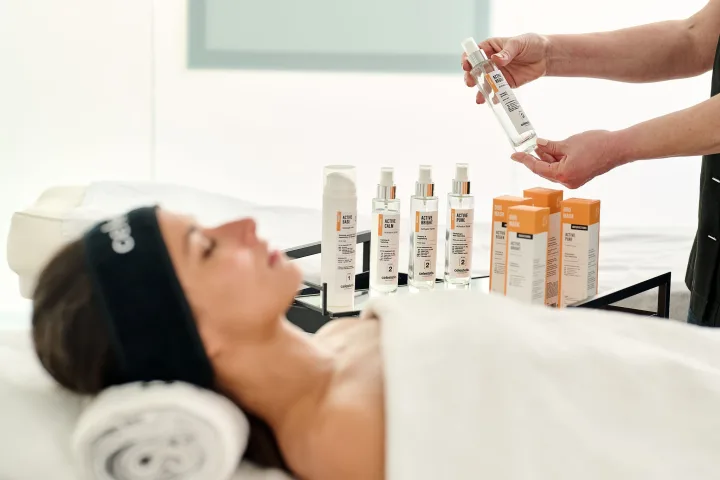
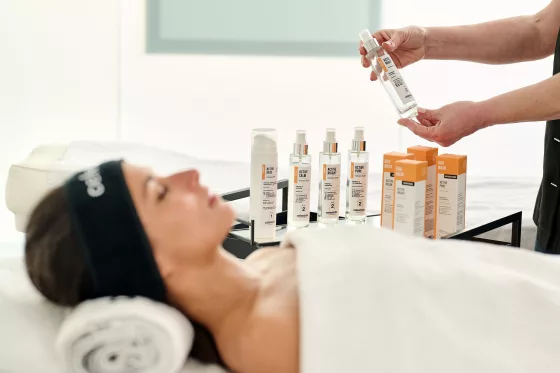
The results of a course depend as much on the daily routine as on the sessions. It is also a natural retail lever for the salon. The cel.estetic range offers a line dedicated to oily and acne-prone skin.
- Pure Foamer, a purifying cleansing foam with niacinamide and panthenol, for oily skin and blackheads.
- Pure Tonic, a purifying and rebalancing toner.
- Pure Perfect, a rebalancing anti-blemish serum with phytic acid.
- Pure Repair, a mattifying, purifying and sebum-regulating cream with niacinamide and zinc.
- Matte Protect, a mattifying day cream SPF 50.
- Active Peel, a night cream with mandelic and salicylic acids, for skin that tolerates it.
- Anti-blemish patches, for targeted spot treatment.
The mistakes that hold results back
- Stripping the skin. Oily skin that is assaulted often produces more sebum and becomes reactive. Purify, yes; dry out, no.
- Stacking exfoliating actives at home on top of the in-salon peels.
- Stopping the course too early. The first improvements encourage the client to space out sessions: that is the moment to remind her of the planned programme.
- Forgetting sun protection, essential after a peel and to limit marks.
- Promising perfect skin. We talk about a gradual, visible improvement in the appearance of the skin, not a guaranteed result.
Blemish-prone skin does not transform in a single session: it is built over a course of treatment.
Training
The EAOT Academy offers Chemical peels and Microdermabrasion training, in person or as a digital version on my.celestetic. The Skin diagnosis training completes the path, so you can lead the initial consultation with confidence.
Further reading
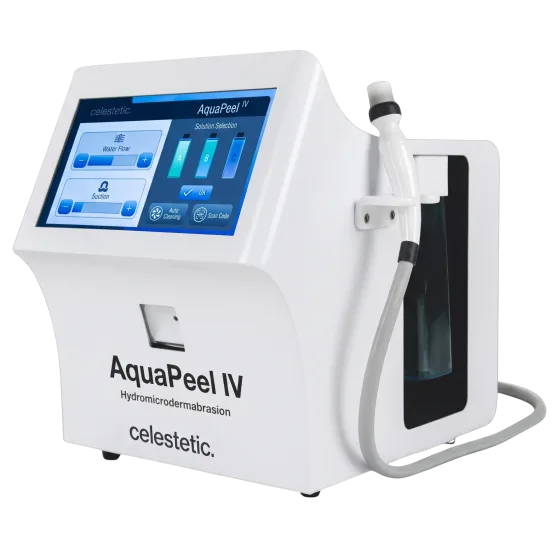 Appareil
AquaPeel IV
Cleanse, exfoliate and hydrate in one session, face, body and scalp
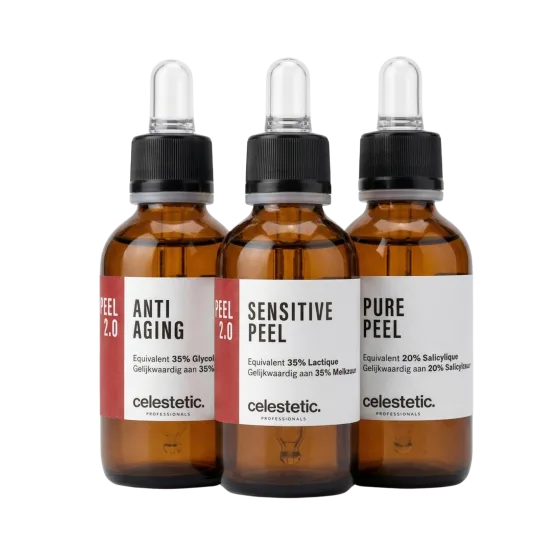 Produit
Peel 2.0
Superficial fruit acid peels, effective and better tolerated
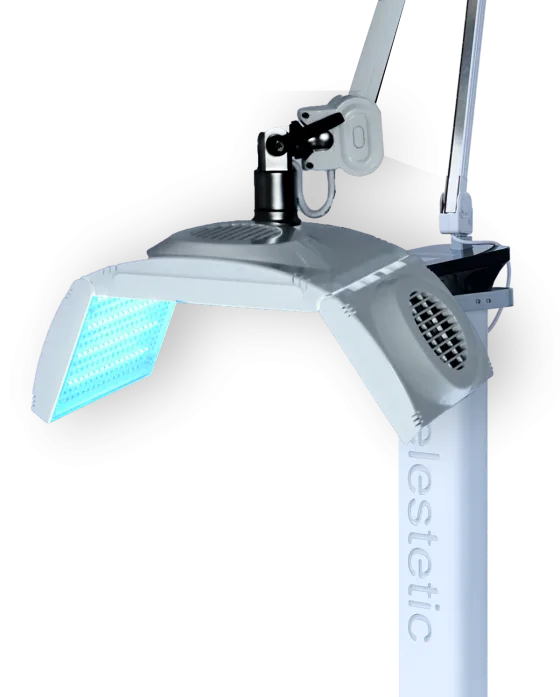 Appareil
BioLED II
LED light to soothe, regenerate and extend your treatments
 Article
Choosing your professional peel: the right formula for every skin
Blemishes, pigmentation, wrinkles, reactive skin: every concern calls for a different peel. The guide to choosing the right Peel …
 Article
Sensitive or sensitised skin: the diagnosis that changes the whole protocol
Both sting, redden and feel tight. But one is a predisposition, the other is skin damaged by excessive treatment. Telling them ap…
Formation
Diagnostic de la peau
Cette formation essentielle au métier de l’esthétique apportera des réponses concrètes à toutes vos questions, choix des traiteme…