Contents 6 sections
Firming the jawline, tightening the neck, giving the skin back its hold: it is one of the most common requests in the treatment room. Three non-invasive technologies answer it: HIFU, radiofrequency and LED.
All three set out to stimulate collagen. They create controlled heating or stimulation in the skin, which triggers an immediate contraction of the fibres and then, over several weeks, the production of new collagen. What separates them is the depth at which they act, the sensation for the client and the pace of the sessions.
HIFU: precise heat points, down to the SMAS
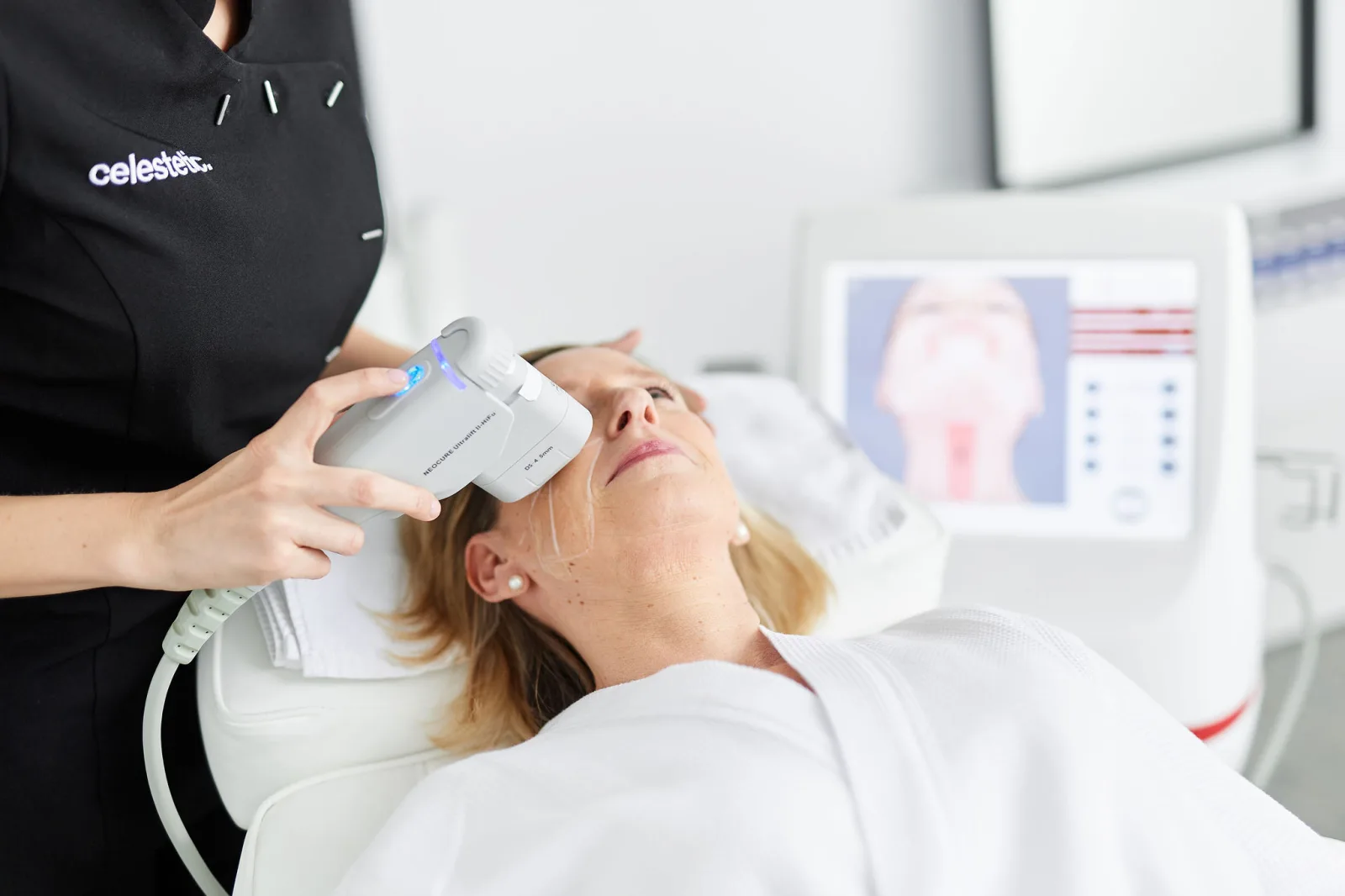
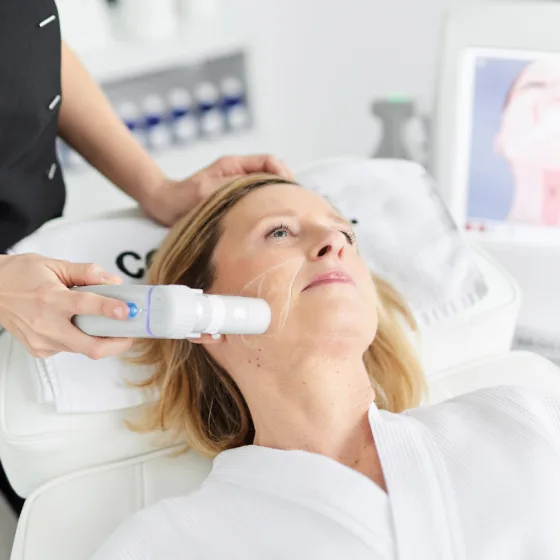
HIFU stands for High Intensity Focused Ultrasound. The ultrasound energy is concentrated beneath the skin, at 1.5, 3 or 4.5 mm depending on the protocol, without damaging the epidermis. The deepest layer reached is the SMAS, the one a surgeon tightens during a facelift.
At the focal points, the temperature briefly exceeds 47 °C and creates small zones of coagulation, which new, more elastic tissue then regenerates. Around them, the tissue does not heat up.
- 4.5mm
- depth of the deepest focal points, at SMAS level
- 47°C
- temperature briefly exceeded at the focal points
- 12weeks
- for a fully visible result
Source: Teonia technology guide, HIFU sheet.
HIFU
A session in practice
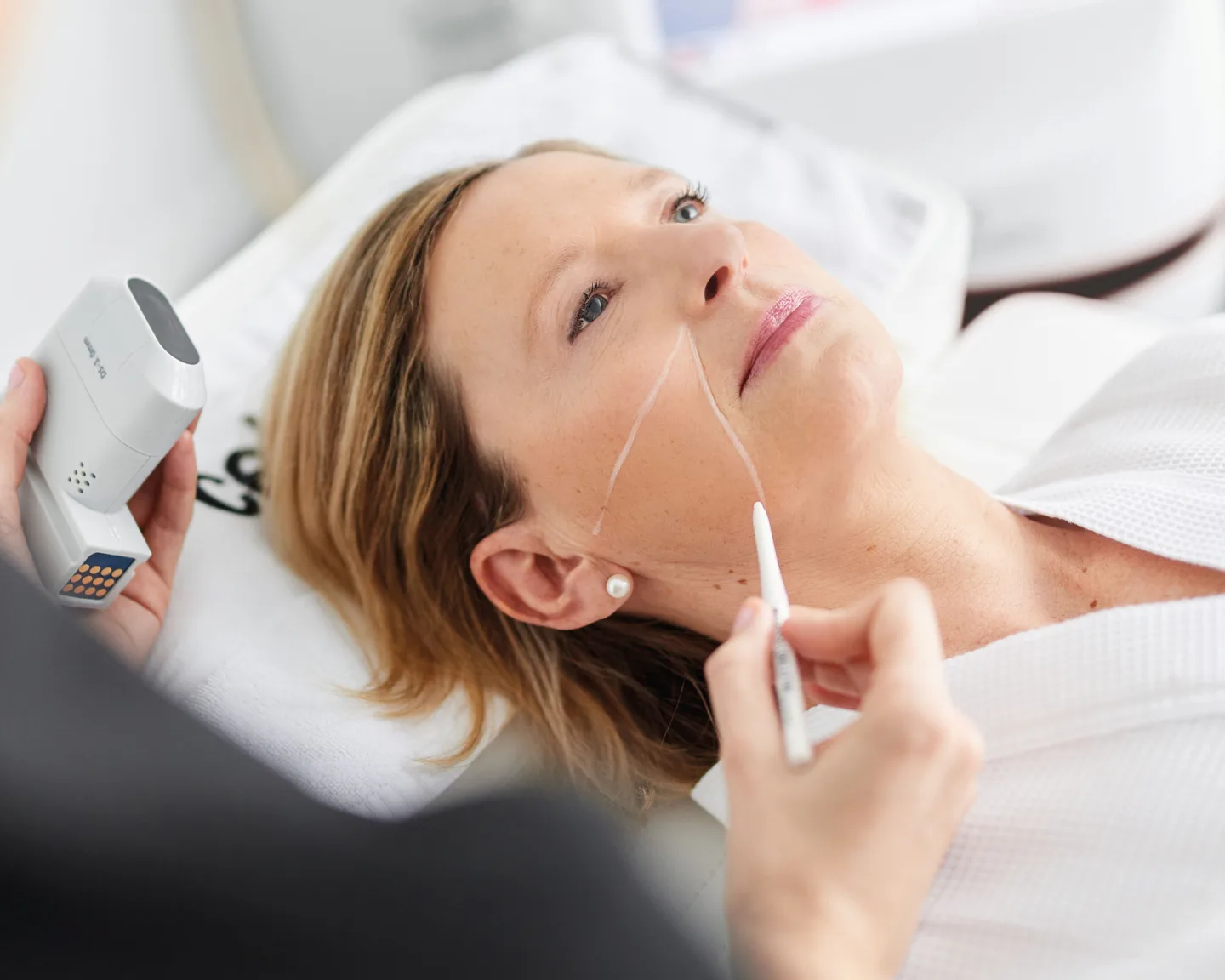
Cleansing, marking out the areas to treat and the areas to avoid (jawline, Adam's apple, nerve pathways), choice of head and settings, then the ultrasound shots.
Most clients describe a slightly unpleasant heat, but not pain. An effect is visible from the session itself and improves over about 12 weeks. Two to three sessions are usually enough, then two to three maintenance sessions a year.
Radiofrequency: diffuse heat in the dermis
Radiofrequency uses a high-frequency alternating current. As it passes through the skin it meets the resistance of the tissue and produces heat: the dermis is brought to a controlled temperature, more diffusely and more gently than with HIFU.
- Monopolar: the current travels to a plate placed elsewhere on the body. It goes deeper, but heats more diffusely and can be less comfortable.
- Bipolar: the current flows between two nearby electrodes on the same handpiece. The heat stays more superficial and better controlled. That is the choice made by the BodyPerfect III.
The effect is twofold. Immediate, because the heat contracts the collagen fibres and the skin looks tighter for a few hours to a few days. Lasting, because the heating restarts the fibroblasts, which produce new collagen over several weeks. It is built with a course of closely spaced sessions, then maintenance.
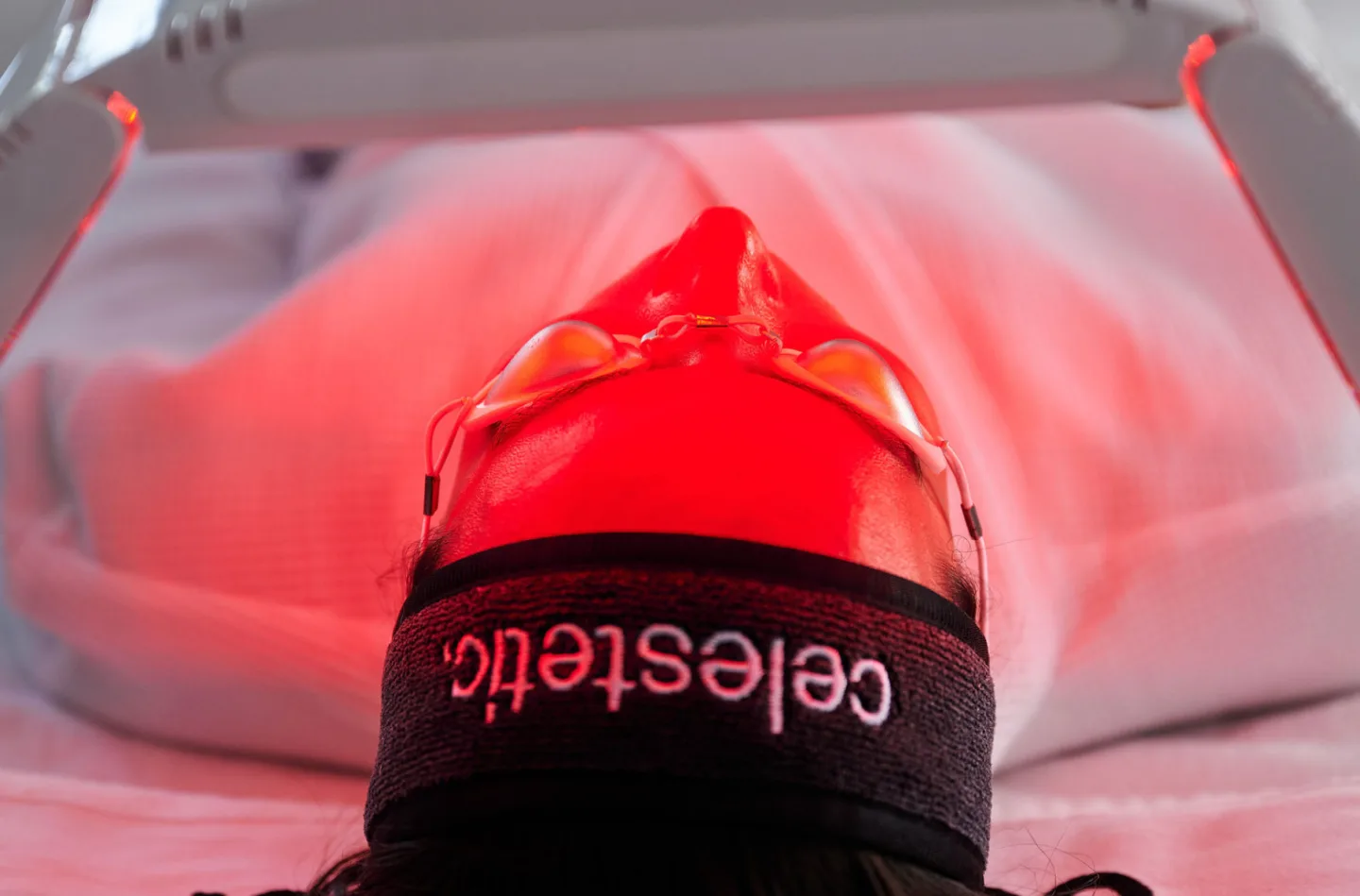
LED: stimulating without heating
Photobiomodulation exposes the skin to light of a precise wavelength. Unlike a laser, LED light is low in intensity, diffuse, and does not heat the skin. Red light, around 630 nm, acts at the surface and in the dermis; near-infrared, around 800 to 850 nm, penetrates more deeply.
The light is absorbed by the mitochondria, the cells' power plants, which then produce more energy. The fibroblasts, better supplied, make more collagen. The effect works through activating the metabolism, not through a micro-injury as with HIFU or radiofrequency: no redness, no downtime, but more discreet results, built up over a course of several sessions a week.
The comparison
| HIFU | Radiofrequency | LED | |
|---|---|---|---|
| Principle | Ultrasound focused at precise points | Current that heats the dermis | Light that activates the cells, without heat |
| Depth | 1.5, 3 or 4.5 mm, down to the SMAS | Dermis; deeper with monopolar | Surface and dermis; deeper with near-infrared |
| Sensation | Slightly unpleasant heat, not painful | Heat, light redness at the end of the session | None |
| Pace | 2 to 3 sessions, then 2 to 3 a year | A course of closely spaced sessions, then maintenance | Several sessions a week, then maintenance |
| After the session | Protect the skin and avoid the sun for a week | No sauna, hot bath or intensive exercise for 48 hrs | Immediate return to normal |
| Result | Gradual, complete at around 12 weeks | Immediate, then lasting over the course | More discreet, built over time |
Firming treatments do not manufacture collagen: they prompt the skin to produce it.
Which clients?
All three technologies address mild to moderate laxity, in clients with realistic expectations who are available for several sessions. Significant laxity is more a matter for surgery: better to say so at the diagnosis stage.
- HIFU: women and men, often from 30 onwards, who want to redefine the jawline and firm the neck and chin in few sessions.
- Radiofrequency: clients who prefer a gentler heat and a regular appointment, on the face as well as the body.
- LED: dull or tired skin, first signs of laxity, prevention, or skin sensitised after a more intensive treatment.
Combining the technologies
Because they do not act at the same depth, these technologies combine well: HIFU and radiofrequency on the face, radiofrequency and LED. Everything hinges on the calendar.
Building a combined course
- 01Assess the laxity
Mild to moderate: the non-invasive technologies are indicated. Significant: refer for medical advice.
- 02Choose the main technology
HIFU to tighten the jawline and neck at depth in few sessions, radiofrequency for a regular course.
- 03Respect the intervals
After HIFU, no laser or radiofrequency for 15 days. Between two technologies, leave one to two weeks.
- 04Support with LED
With no heat and no downtime, it is easy to add, particularly on skin sensitised after a more intensive treatment.
- 05Plan the maintenance
New collagen ages like the rest of the skin: a maintenance session extends the effect, two to three times a year for HIFU.
Which device to choose?
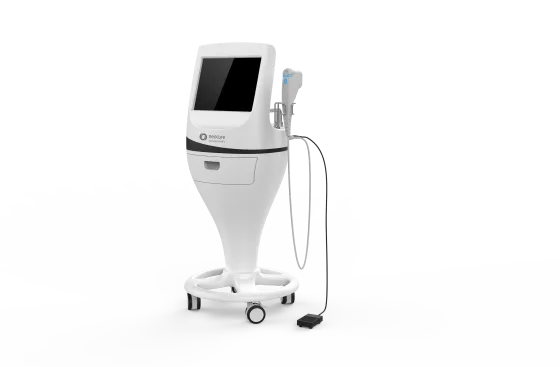
The right choice depends on your clientele and your treatment menu. The HIFU in the UltraLift III targets the jawline and neck in few sessions. The bipolar radiofrequency in the BodyPerfect III works the body in a course. LED complements either one.
Your consultant will help you build a coherent offer, and EAOT, our training centre, trains your team in the protocols.
Further reading
 Guide technologie
HIFU, the non-surgical lift
High-intensity focused ultrasound heats precise points beneath the skin to tighten the facial contour, neck and décolleté, with n…
Guide technologie
Radiofrequency in aesthetics: principles and how it works
Radiofrequency gently heats the dermis to firm the skin. How it works, the difference between monopolar and bipolar, and how to b…
Guide technologie
Red and infrared LED in aesthetics: photobiomodulation
LED stimulates skin cells with light, without heat or pain. How photobiomodulation works and the indications for using it.
Guide technologie
Neocollagenesis: the natural production of new collagen
Firming treatments do not "make" collagen: they prompt the skin to produce it. Understanding this process explains why results bu…
 Appareil
UltraLift III
A non-invasive alternative to a facelift, with three treatment depths.
esthetic.academy
esthetic.academy