Contents 5 sections
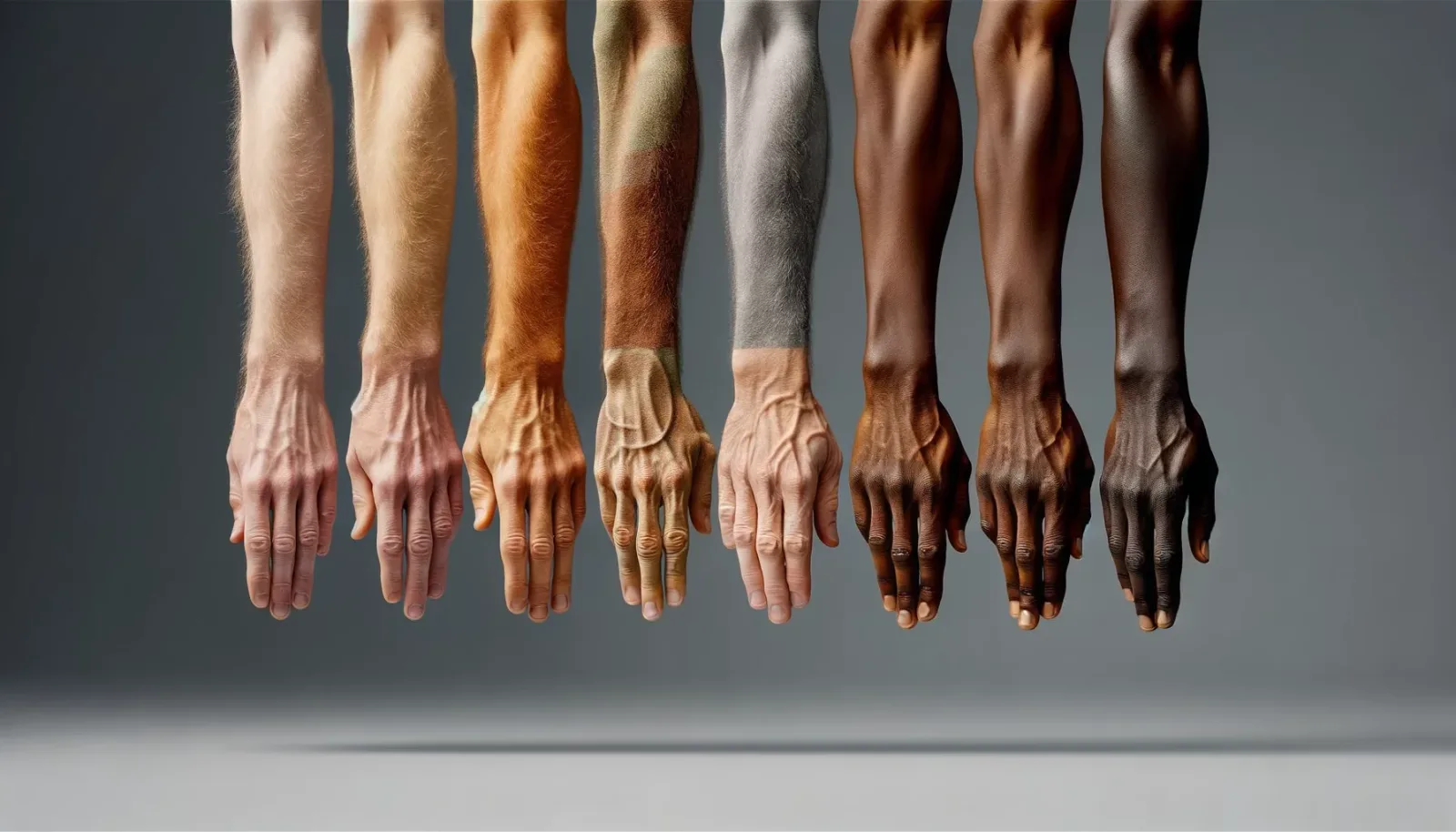
Phototype is not just about tanning. The amount of melanin comes with differences in the skin's structure and response, and those change how you set a laser, choose a peel or dose a heat-based device.
There are two things at stake: avoiding burns and prolonged redness on light skin, and avoiding pigmentation on dark skin. And, along the way, properly welcoming a clientele that many aesthetic professionals still do not know how to treat.
The Fitzpatrick scale, your first tool
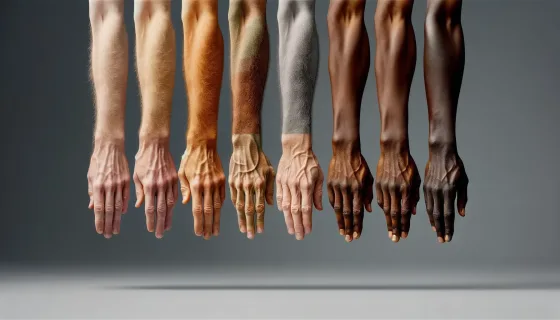
Published in 1975, it classifies skin into six phototypes by colour and reaction to the sun, from phototype I (very light, always burns, never tans) to phototype VI (black skin, almost never burns). A simple questionnaire (freckles, how easily you tan, sunburn) plus observation is enough in the vast majority of cases. When in doubt, choose the settings for the darkest phototype and run a test.
What changes from one skin to another
The differences are not only cosmetic: they are functional.
| Light skin (I to III) | Dark skin (IV to VI) | |
|---|---|---|
| Sun | Burns easily | Burns less, but pigments unevenly |
| After an assault | Redness, erythema, tendency to rosacea | Post-inflammatory pigmentation |
| Barrier | Thinner, loses more water | More compact stratum corneum, prone to dryness |
| Ageing | Early photoageing | Later, with localised loss of density |
| Acids and peels | Well tolerated in a gentle formula | Risk of pigmentation if the acid is too strong |
The technologies that depend on phototype, and the others
Every technology that uses light (lasers, intense pulsed light) is phototype-sensitive: the melanin in the skin absorbs part of the energy intended for the target. The longer the wavelength, the deeper it penetrates and the less the epidermis absorbs it.
- 755 nm (alexandrite): fine hair on light skin.
- 808 nm (diode): the versatile reference, with adapted settings.
- 940 and 1064 nm: the safest on dark skin.
Radiofrequency, HIFU, cryolipolysis and EMT do not rely on light absorption by melanin: they can be used on every phototype, with the usual precautions.
Laser
In hair removal, phototype guides everything
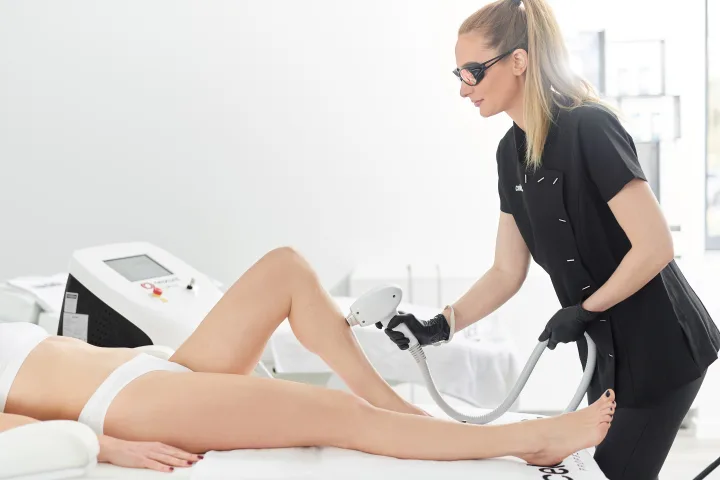
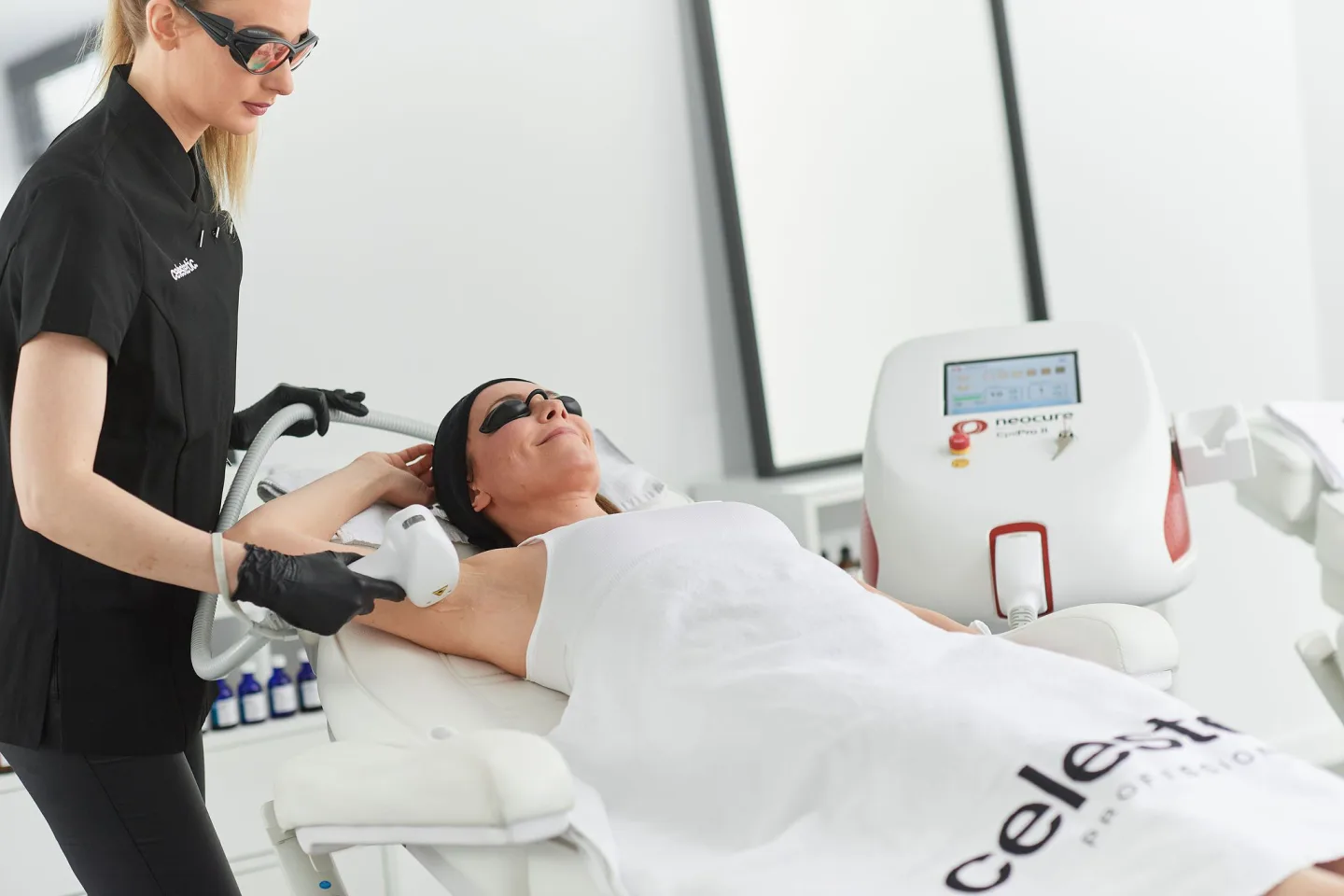
It determines the wavelength and the energy. On phototypes V and VI, more cautious settings often mean more sessions and longer intervals, and a prior test on a small area is essential.
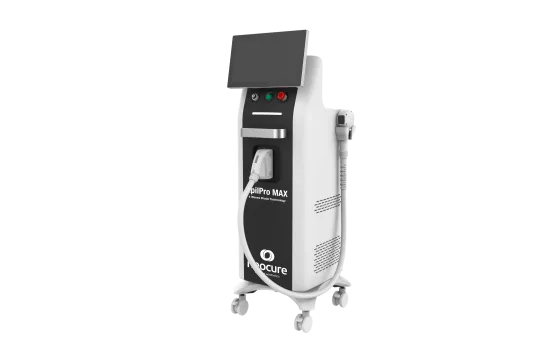
With four wavelengths (755, 808, 940 and 1064 nm), the EpilPro MAX adapts every session to the phototype, from I to VI.
Dark skin: the treatments to favour
On phototypes IV to VI, treatments must be gradual, reparative and anti-inflammatory, with a preventive approach to pigmentation. Some treatments that are highly effective on light skin become irritating or pigment-inducing if not adapted: peels that are too strong or at too low a pH, abrasive techniques, poorly controlled heat, photosensitising actives without protection.
Four treatments well tolerated by every skin tone
- 01Gentle microneedling
With non-acidic serums it refines the texture and revives radiance without assaulting the surface.
- 02Peels with gentle acids
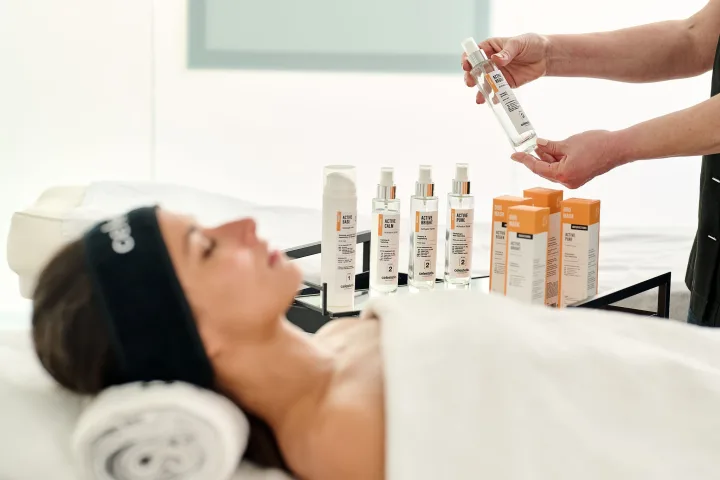
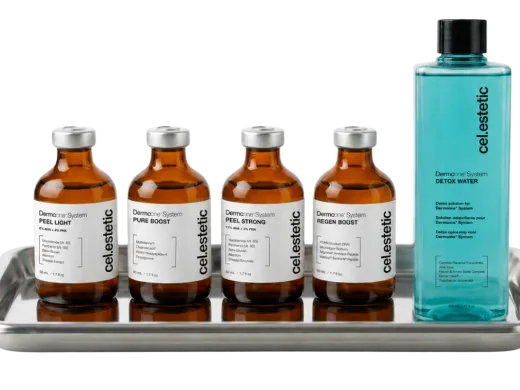
Mandelic acid penetrates slowly and irritates less. Peel 2.0 combines it with soothing and anti-pigment actives.
- 03LED
Well tolerated by every phototype, it limits the inflammation that causes pigmentation.
- 04Hydro-microdermabrasion
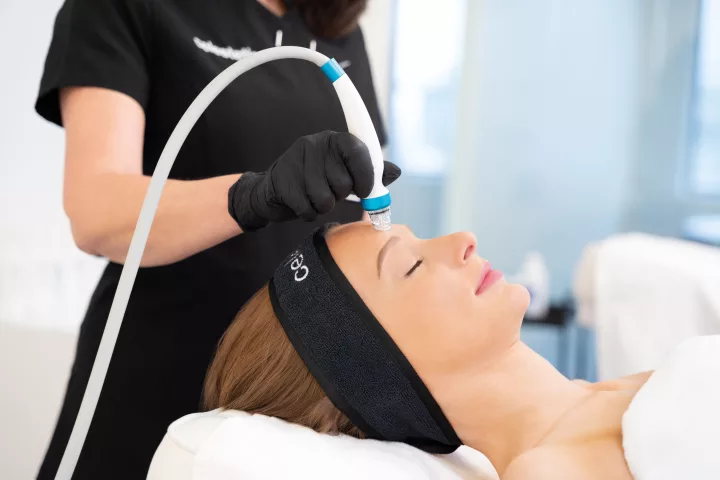
Non-abrasive, it cleanses, exfoliates and hydrates gently. That is the principle of the AquaPeel IV.
The right language
Personalising is not "treating differently". Drop "lightening" and "whitening": talk about evening out the complexion or bringing out radiance. Explain to your client why you are choosing a given wavelength or acid: that is what builds trust.
Being able to adapt your treatments to every skin tone is a genuine point of difference, in a market still barely trained in these specifics.
Further reading
 Guide technologie
Laser hair removal and skin types: from fair to dark skin
Your client's skin type determines the wavelength, the settings and the number of sessions. Guidelines for safely treating every …
 Appareil
EpilPro MAX
755, 808, 940 and 1064 nm in a single laser, for all phototypes and hair types.
 Article
Sensitive or sensitised skin: the diagnosis that changes the whole protocol
Both sting, redden and feel tight. But one is a predisposition, the other is skin damaged by excessive treatment. Telling them ap…