Contents 3 sections
LED is often presented as a treatment in its own right. Yet it has another, less publicised talent: finishing other treatments well.
At the end of a protocol it adds neither heat nor micro-injury. It helps the skin return to balance faster, and that is exactly what it needs after a treatment that has stimulated it.
What the light does
Photobiomodulation relies on precise wavelengths, absorbed by an enzyme in the mitochondria called cytochrome c oxidase. Cells then produce more energy (ATP), inflammatory signalling is modulated and repair mechanisms speed up.
This is not a simple wellness effect: these mechanisms explain why LED has been used for years in dermatology and wound healing.
Why specifically at the end of the treatment
Calming the inflammation
After an aesthetic treatment the skin shows transient inflammation, dilated vessels and increased permeability. Red and near-infrared light reduce pro-inflammatory signalling and help it settle faster: less redness, less discomfort, a better-tolerated treatment.
Speeding up repair
Photobiomodulation stimulates fibroblasts, collagen synthesis and the organisation of the dermis. That matters after treatments that challenge the skin: superficial peels, microneedling, radiofrequency, non-ablative lasers. Repair is of better quality and results are more even and longer lasting.
Stimulating without stressing
LED creates no micro-injury, no aggressive heating and no damage to the skin barrier. It is a gentle stimulation, compatible with skin that has already been worked on.
In the treatment room
Hands free, while you prepare what comes next
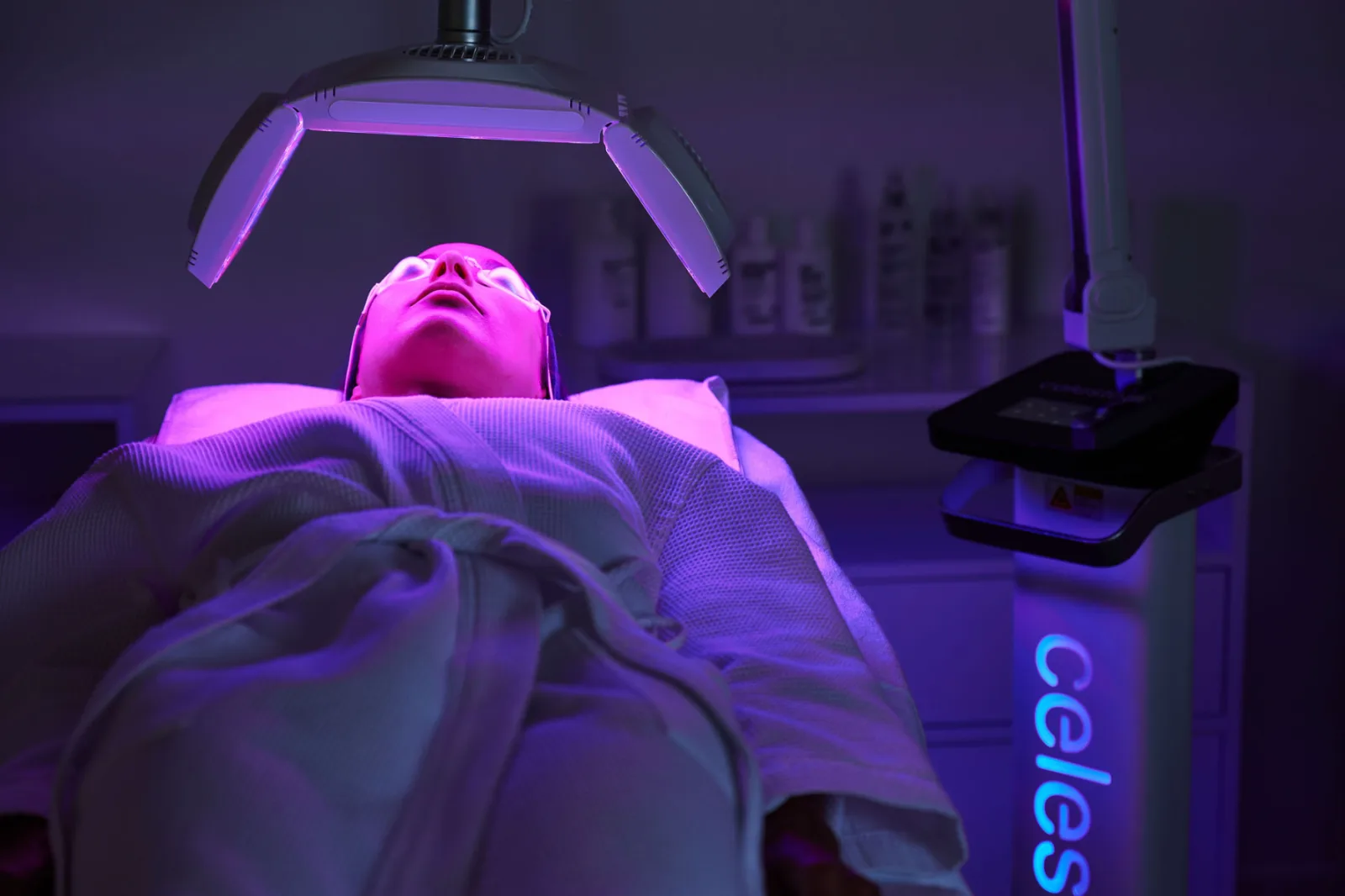
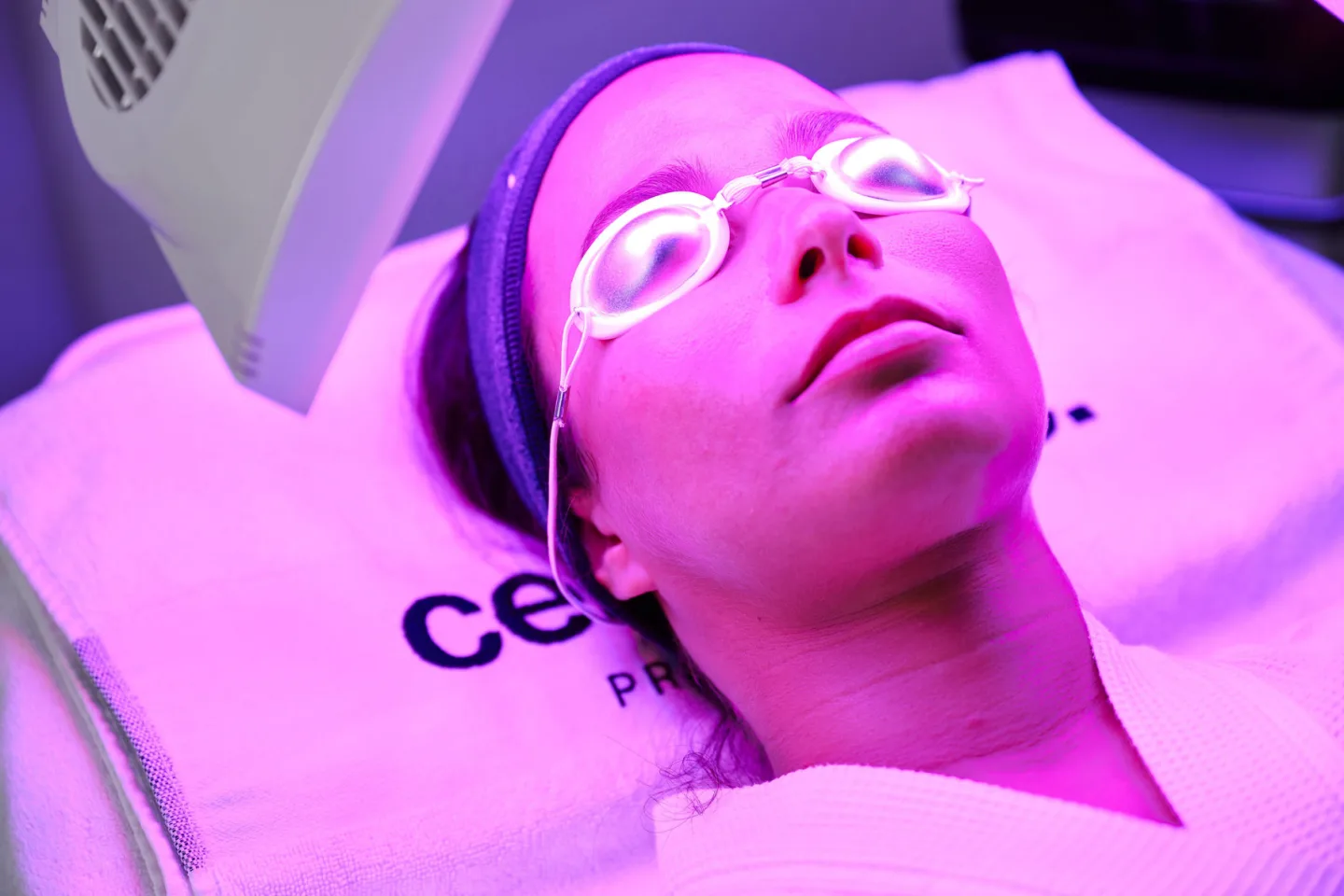
A lamp such as the BioLED II works on its own: 720 blue, red and infrared LEDs, sessions of 15 to 25 minutes, with no handpiece to hold. You can use that time to plan your client's home routine.
To treat the body and scalp as well, the NeoLight spreads 300 LEDs across five adjustable modules.
Which light, and when?
| Wavelength | At the end of the treatment | |
|---|---|---|
| Red | Around 630 nm | Inflammation, radiance, superficial repair: the baseline for finishing a treatment |
| Near-infrared | Around 830 to 850 nm | Deeper regeneration and comfort after an intensive treatment |
| Blue | Around 415 to 465 nm | Targeted indications such as acne; not for routine use at the end of a treatment |
Which treatments to schedule it after
- 01After a superficial peel
The skin tingles and reddens: red light soothes and supports repair.
- 02After microneedling
It extends the action of the treatment at depth and limits the after-effects.
- 03After radiofrequency or a non-ablative laser
Red and near-infrared help heated skin settle down again.
- 04After a scrub or hydro-microdermabrasion
A 15 to 20 minute session extends this surface treatment at depth.
LED becomes a tool for optimising results, rather than just another piece of technology.
A benefit for your business too
Finishing with LED improves the client's experience: they leave calmer. It makes your protocols safer by reducing visible reactions after the treatment. And it adds value to your menu without complicating your schedule: the device works on its own for a quarter of an hour.
It is also an excellent complement to firming treatments, as our comparison of HIFU, radiofrequency and LED shows.
Further reading
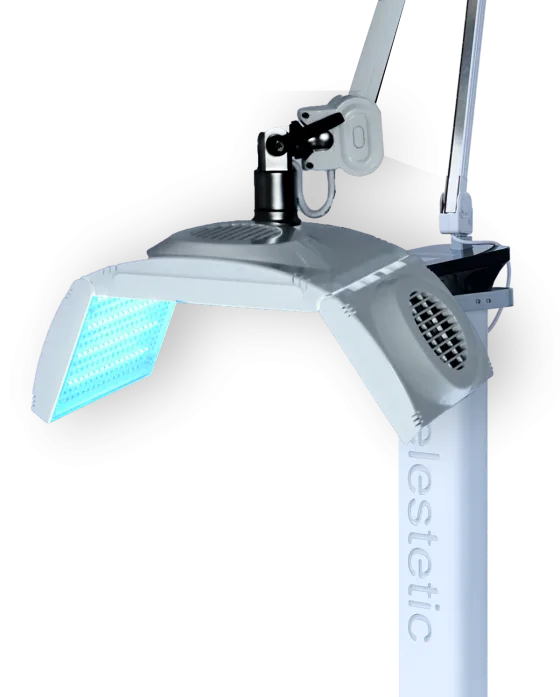 Appareil
BioLED II
LED light to soothe, regenerate and extend your treatments
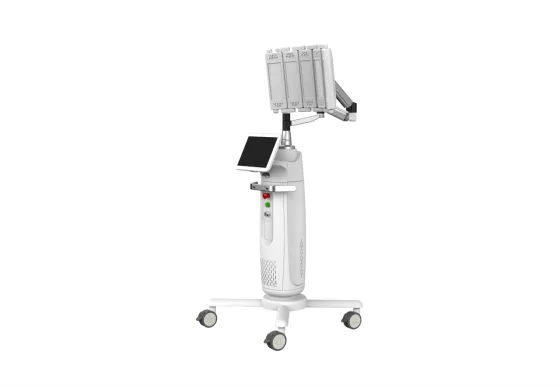 Appareil
NeoLight
Targeted LED light for the face, body and scalp, as a hands-free treatment.
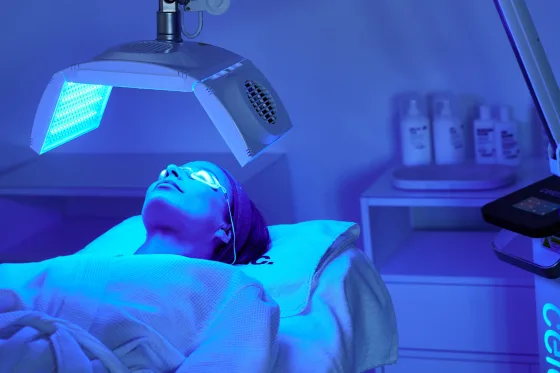 Guide technologie
LED photobiomodulation
LED light stimulates skin cells without heat or pain. On its own or at the end of a treatment, it soothes, regenerates and prolon…
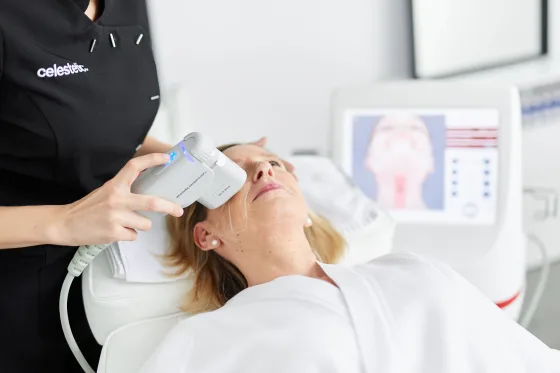 Article
HIFU, radiofrequency or LED: which technology to firm the skin?
All three restart collagen production, but not at the same depth or at the same pace. What sets them apart, which clients they su…